We
asked Brian Taylor to post a regular update about the book he has written about drag racing.
As most of you will know it is called 'Crazy Horses � The History of British Drag Racing'
|
|
|
|
|
|
|
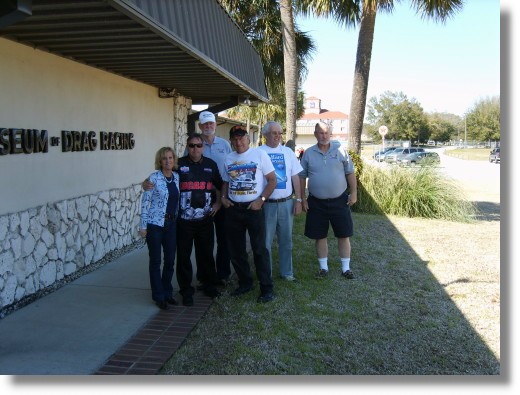
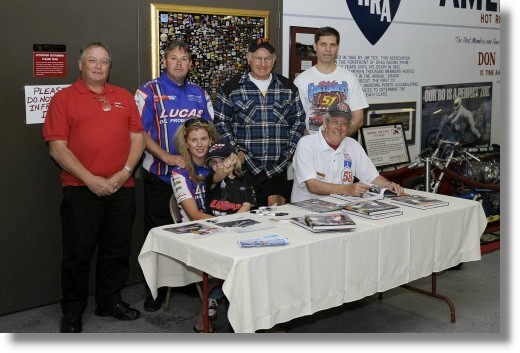
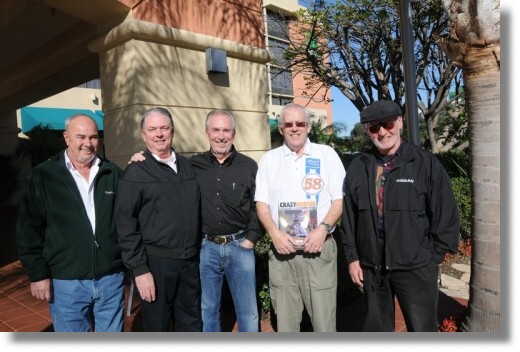
CRAZY HORSES AT OCALA AND COVENTRY The American East Coast launch of Crazy Horses took place at the Don Garlits Museum of Drag Racing in Ocala, Florida March 6th/7th. Not knowing exactly where Ocala was I took a Delta flight to Atlanta, a 36-seater Delta Connect flight to Gainesville and then a taxi to Ocala. Not the right decision I�m afraid. Taxi cost me $130. And despite forking out for the special type of suitcase lock (recommended for flights to America so that customs officers can unlock the cases they select for random opening), my lock was simply ripped off, damaging the suit case in the process. The baggage handlers also managed to crunch my un-bendable carbon fibre case. The security entering the USA was really tight with not enough staff to process people at Atlanta. Welcome to post 9-11 America! My advice to those of you wanting to visit Don�s amazing museum and not wishing to pick up a rental car at the airport; fly to Orlando and take a shuttle to the Sleep Inn and Suites, Ocala ([email protected]). It�s right next to the museum and if you are over 55 don�t forget to ask for the seniors rate. You can also arrange car rental there. The hotel is like a Travel Lodge but more friendly. The shuttle costs just $40. (shuttleliner.com). It�s a bit remote but there is a selection of different diners nearby. The weather was cold at night (below freezing) and warm during the day (65-70F). I arrived on a Thursday and reserved Friday as a �chill-out� day by the pool. Got sun-burnt of course and eventually found a garage that had one bottle of Factor 4 Palm Oil. Better than nothing I suppose. Called into the museum and said hello to Don and T C Lemons. In the evening I was joined by Bud Barnes and Bob Gladstone (Ultrasonic Santa Pod 1966/67) and Tex Blake (Santa Pod 1967 Hustler when he beat John Woolfe). Got acquainted with Taco Bell Fruitista Freeze (iced drink), but the gang dragged me to a Hooters for the evening. (McDonald�s with boobs). Saturday was the first official book-signing day. As well as Don and myself we had Bud and Bob, Tex, Andy Carter, Sarah and their son Attila, Syd McDonald, Les Sanderson, Viveca Averstedt and Haakan. Also met Don�s wife Pat who I last saw in 1976. She�s not so well these days but is still charming. It was the first time I had met Viveca and what a lovely person she is. We sold a few books and I got to know everyone much better. A really nice day.
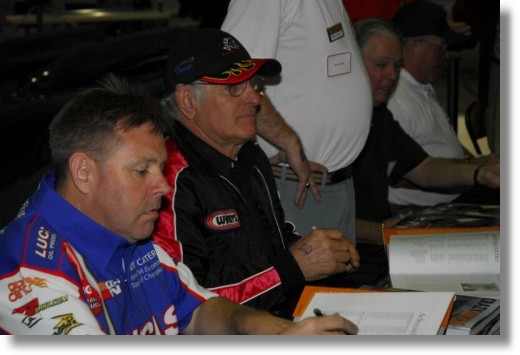
Sunday was the second official signing and we had Don, myself, Bud and Bob, Tex Andy and co. (plus his team). We were also joined by Micke Gullqvist and his wife on their way to Gainesville where he made all Europeans proud with his Pro Mod runner-up achievement, and the dynamic duo of Roger Gorringe and Andy Willsheer. Sold a few more books. Don makes himself so accessible to his fans, always pleased to answer questions and relay stories. He has so much patience and is such a great ambassador for drag racing. Mind you all those years dealing with promoters has meant that he does not suffer fools gladly in business.
For me, to spend two days as part of the museum offer was an honour. It was something I promised myself I would do when Don graciously agreed to write the Foreword to Crazy Horses. And to hear him praise the quality of the book to his friends and museum visitors was reward in itself.
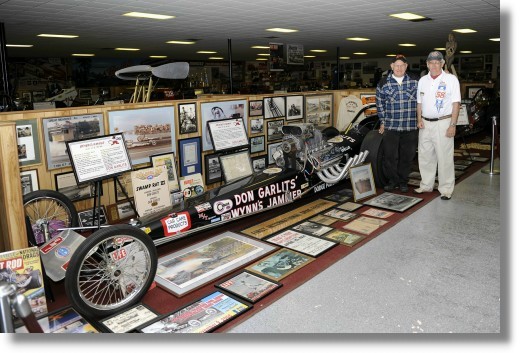
Monday was another �chill-out� day by the pool for me. Signed the remaining copies of Crazy Horses for Don and said my farewells. Thanks to everyone who joined me over the weekend and especially to Don for enabling it to happen. Every drag racing fan should make the pilgrimage to this museum. Don is usually available for a chat. There are some really historic drag racing cars. It�s not just the cars that Don has driven, built or been involved with in one way or another - although they do form the focus of the exhibits because Don dominated the sport for so long. There are many other famous cars on display and even a separate Classic and Vintage Car Museum. I would have liked to stay for the Gatornationals but I could not locate a book retailer at the track and without that I had no books to sign. I also had Ally at Race Retro so Coventry won out over Gainesville in the end.
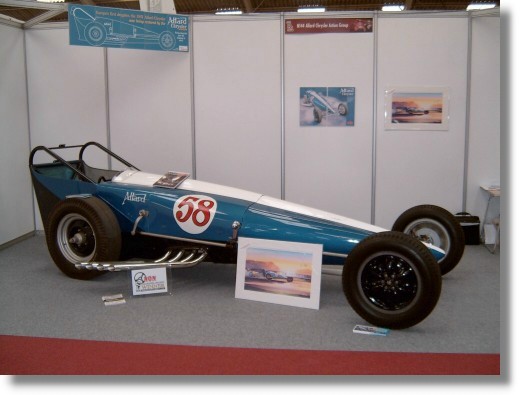
Showing the car at Race Retro through March 12th-14th prompted much interest in the restoration project from visitors and the press. I was only able to attend on the Sunday and we sold a few signed copies of Crazy Horses plus a couple of prints. Had I been able to attend all three days I�m sure we could have sold more of both items but we can only do what we can do and there was no way I could get stocks up to Coventry before hand. Bob Roberts and Phil Brown covered the first two days, logging enquiries that I was able to follow-up, and Syd McDonald helped me out on the Sunday. Jerry Cookson and the Wild Bunch team also kept an eye on the car for us. One thing I have found most interesting is how people view the car now compared to when we first started to promote its restoration. Early comments were typified by �Isn�t it ugly� because people did not understand why the car was designed this way and of course it bears little resemblance to modern dragsters. It is more common now for people to make comments like �Isn�t she beautiful�. Clearly a deeper understanding of its construction and importance plus its heightened celebrity status are all having an effect.
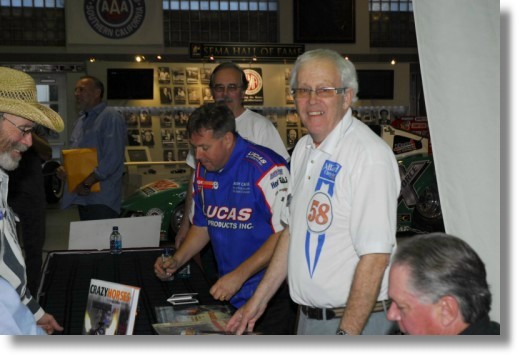
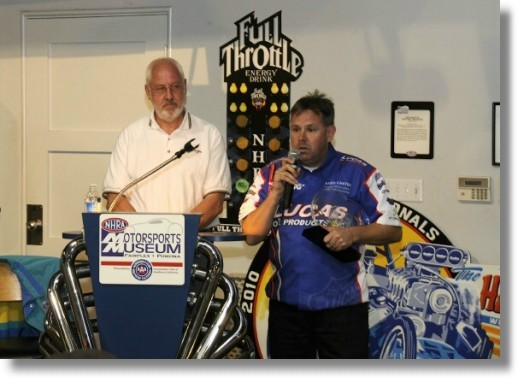
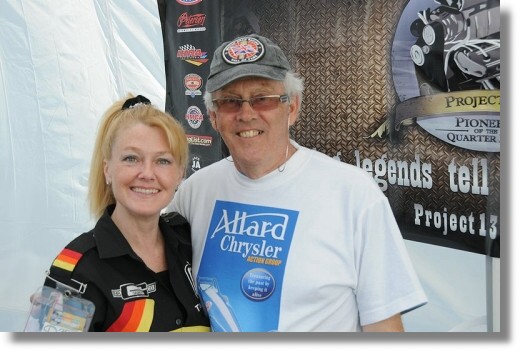
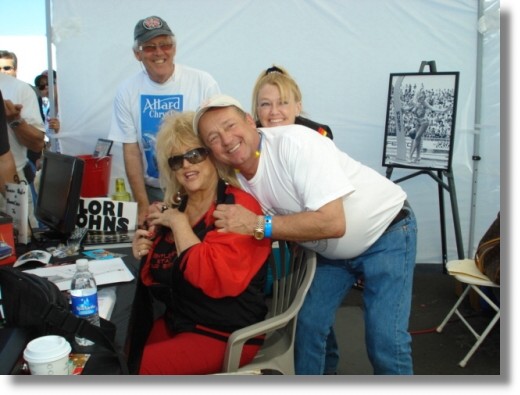
50TH O�REILLY NHRA If you had just written a book about drag racing, where would you want to launch it? How about at the NHRA Wally Parks Motorsports Museum, Pomona during the Night of Champions linked to the 50th O�Reilly Annual NHRA Winternationals in 2010? Thanks to Museum Director Tony Thacker, that�s exactly where the East Coast launch of Crazy Horses - the History of British Drag Racing took place, with author Brian Taylor and 1970s Top Fuel racer Peter Crane flying out to California to head the UK contingent who would sign copies. Despite landing on Tuesday in a storm, Wednesday dawned fine and the nostalgia started with a meet-up at the Holiday Inn, Diamond Bar when Peter and Brian met up with 1960/70s UK drag racing stalwarts and now USA residents Clive Skilton, Rex Sluggett and Cliff Jones. Carl Olson dropped in to join the reminiscing and a pleasant afternoon was had by all. I mentioned to Carl about a Pelle Lindel�w plan to present Andy Carter with his 2010 FIA award at the Crazy Horses museum launch. Tog had copied me in on an e-mail from Pelle, but Carl and myself thought we could pull a few strings and make it a part of the official Night of Champions in front of the USA�s drag racing glitterati and assembled press. Carl left to cement the plan with the NHRA and the museum. Thursday was the first day at the track to meet the crews from Project 1320 and Allard Chrysler engine builders Booth Arons. Sam Eidy, Erik Hummel, Bob Pacitto (1966 Commandos Team) and former Winternationals Top Fuel Champion Lori Johns did the lion�s share of work at the Project 1320 booth on the first day, while Peter and myself helped out when required. We met John Lundberg, Harry Hibler, Don Ewald and Mike Kuhl.
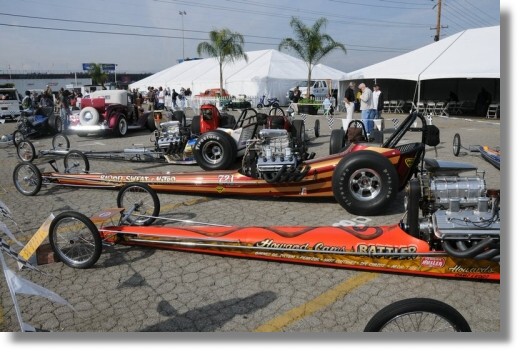
Based in the Golden Corral housing around 80 nostalgia cars (the plan was for 50) that randomly fired up during the day, I started collecting autographs for two copies of Crazy Horses that will be auctioned for Allard Chrysler dragster restoration funds later in the year. Another fine day on Friday saw the first track signing of Crazy Horses at Pomona. This was to become a regular feature of Corral activities lining up with the main Drag Racing Legends signing. I met Dave McLelland who was announcing the legends' signings in the Corral and he added Crazy Horses to his PA promotions list. Good job I sent him a copy! Book signings at the track were mainly handled by myself at a table next to the NHRA Museum sales booth in the Corral. It was interesting to meet a few Europeans as well as talk about European drag racing and the Allard Chrysler project to Americans - many of whom were amazed that we had a drag racing scene in Europe. Some thought the Allard Chrysler looked �kewl� while others used the word weird until I explained about the sprint rules in place when it was built �back in the day�. Roger Gorringe and Andy Wilsheer stopped by the Project 1320 booth to say hello. And I met a new friend called Margarita. She was very refreshing. The main Crazy Horses launch was at the museum before the Friday Night of Champions presentations. Not everyone made it but what a line up we had.
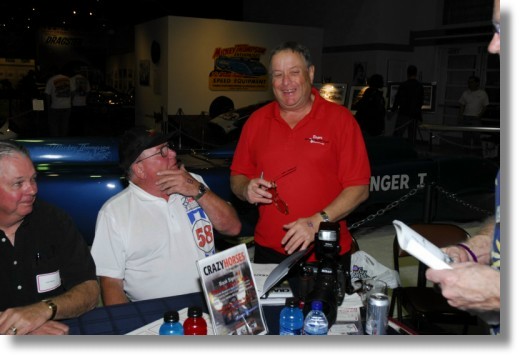
Clive Skilton was unable to make it as he was on a plane to India, but from Europe we had Cliff Jones (Crescent/Chicken Coupe), Rex Sluggett (Tudor Rose/Duke of Cornwall), Peter Crane (Stormbringer), Syd McDonald (1970s BDR&HRA Race Director), Roger Gorringe, Andy Carter, Pelle Lindel�w and Bo Bertilsson (Berserk) - plus me of course. From the USA we had Don Garlits, Tom Hoover, Tommy Ivo, Mereck Chertkow (1965 team), Ed Iskenderian, Carl Olson, Bob Keith (1964/65 team) and Bob Pacitto (1966 team). Traci (bad finger) Hrudka just made it, but Linda Vaughn was snow-bound at Atlanta. Other names who said hello included Dennis Holding (formerly of Mr Gasket), Richard Parks (Wally�s son), Tom McEwen, Jack Beckman and Brent Cannon of Cannon and Soares who sold Stormbringer to Peter Crane and Ray Edmundson in 1974. There was not enough room for everyone to sit at the signing table and I�m sure there were others who I did not recognise. Jon Lundberg was there and I met the NHRA Track Announcer Bob Frey. Both bought Crazy Horses and loved the book. Carl Olson had done his work behind the scenes and after many phone calls we managed to arrange that Andy Carter received his 2009 FIA Top Fuel Trophy as part of the Night of Champions.
Carl Olson (still a good friend to European drag racing) said a few words and introduced Pelle Lindel�w who presented the trophy to a gob-smacked Andy. He said that he was so surprised that he didn�t know what to say. But this is Andy we are talking about so his silence was short lived. Mind you, this was probably the only good thing that happened to Andy this weekend.
Saturday and back at the track it was getting hotter - high 70s. Met more people from Project 1320 and cemented e-mail and Facebook contacts. Also sold a few books from my signing table. Met up with Margarita again. I really liked her. Sunday was even hotter (in the '80s). Linda Vaughn had at last escaped from the snow at Atlanta and after being interviewed at the main track control tower made her way to the Project 1320 booth in the Corral, which immediately became even more popular. '240 Gordie' Bonin had arrived so we now had Linda, Gordie and Lori among the booth staff.
Spent some time with Don Schumacher and got his signature on the two Crazy Horses to be auctioned. Said hello to Steve Gibbs who I interviewed at Santa Pod back in 1980. And I met Bakersfield track announcer Bob Beck who has been following the Allard Chrysler project. Margarita was a problem because the pump malfunctioned and delivered neat Tequila. I tried to finish her off but failed and had to pour half the container on to the tarmac that proceeded to melt. I have to admit that I saw no racing at all at Pomona, spending all of my time in the Golden corral and pits just meeting, greeting and getting to know people. What did I achieve besides having the experience of a lifetime meeting the great names of our sport? Well I sold a few books of course. But the main achievement has been to raise the awareness, credibility and profile of Crazy Horses, the Allard Chrysler restoration project, Project 1320 and, hopefully, European drag racing in general. I also discovered that I like Margarita. Next stop Ocala on March 6th and 7th when it is expected that Don and myself will be joined by Andy Carter, Micke Gullqvist, Viveca Averstedt, Bud Barnes and Bob Gladstone with their slingshot Michigander (also known as Ultrasonic in 1966/67), Les Sanderson (Chairman of the short lived NDRA in 1987), Syd McDonald and Tex Blake (USAF GI and Hustler team member who beat John Woolfe in 1967). More names will be announced shortly and if you are in Florida for the Gatornationals and can make the signing the weekend before just let Brian Taylor know on [email protected]. At Ocala I will be collecting more autographs for the two copies of Crazy Horses mentioned earlier. Signatures collected so far are:
What a starter to add signatures from the regular Santa Pod racers. One book will be accompanied by an exclusive Stormbringer T-shirt. Peter had just five made for the trip and will sign the shirt. The other book will be accompanied by a signed Gordie Bonin Funny Car promo card. Proceeds will go towards the Allard Chrysler restoration fund so sensible bids please to [email protected]. Each signed book pack must be worth three figures surely? Start your bidding.
GARLITS TO HOST THE AMERICAN The official East Coast launch of 'Crazy Horses � the History of British Drag Racing' is at the Don Garlits Museum of Drag Racing, Ocala Florida. With books being available via the museum gift shop, it will take place over March 6th and 7th, the weekend before the Gatornationals, with book-signing sessions held at 2.30pm on both days. Those of you who already have Crazy Horses, bring your copy along and get it signed. The book�s author Brian Taylor will be there, joining Don Garlits and reigning FIA European Top Fuel Dragster Champion Andy Carter. Don has raced in the UK three times � 1964, 1976 and 1977. But it is 1964 that he most fondly remembers. These were the pioneering years when Sydney Allard organised American teams to demonstrate the sport to a British audience only just coming to terms with what dragsters were. Most had never heard one until that time and they were blown away by the show put on by the American team at airfields throughout the country. Don says, Andy Carter says, Author Brian Taylor says, The BDR&HRA Race Director during the 1970s was Syd McDonald and he is joining us for the signings. Other drag racing personalities attending will be announced during the next few weeks. The Don Garlits Museum of Drag Racing is at 13700 SW 16th Avenue, Ocala, Florida 34473. Tel (877) 271-3278. Any Europeans in Florida over that weekend please contact [email protected].
CRAZY HORSESAMERICAN WEST COAST LAUNCH The Crazy Horses track signing times at Pomona have been confirmed to line up with the Legends Autograph sessions on the same days. They will take place at the Wally Parks Motorsports Museum booth situated in the Heritage area and the time table is:-
Changes in the race schedule might alter this. Roger Gorringe hopes to join the Museum signing session at 5.00pm on February 12th as well as some of the track signings. Roger provided most of the colour photographs published in Crazy Horses. And Kjell Pettersson is joining us at the museum. Kjell is Chairman of Svensk Dragracing and along with Keith Bartlett of Santa Pod Raceway has played a vital role in developing the European aspect of the sport during the last two decades. And another American drag racing legend from the team that toured the UK in 1965 is joining us. He is Nick Colbert who drove the Continental Divide Raceway Special - a blown Plymouth Hemi rail. The full list of those planning to attend the Museum launch now looks like this:-
CRAZY HORSES POMONA LAUNCH February 12th in the Wally Parks Motorsports Museum, Pomona will see more names joining the already long list of top drag racing personalities attending the official West Coast launch of Crazy Horses � the History of British Drag Racing. The latest people to say they will be there include legendary funny car driver Tom Hoover who has done so much to help the sport develop in the UK over many years. Also from the USA, but going back many years to the 1965 Drag Festival American team, is Merek Chertcow who drove Dean Moon�s Moonshot dragster until he had a motoring accident at Sydney Allard�s house. In 1966 he went on to drive the Ramchargers Top Fuel dragster. Also joining us from the 1965 team is Chuck Griffiths who drove the Starlight III dragster. Reflecting the pan-European nature of drag racing in the UK, Norwegian Thomas Nataas is joining the gathering. Thomas is racing at Pomona and hopes qualifying won't get in the way. From Sweden we have Bo Bertilsson � now a resident of California and a successful photographer and author. British fans may remember his street rods and his involvement with cars like the ex-Keith Harvey, ex-Sherm Gunn blown fuel altered Berserk and the Bifrost Corvette Pro Comp funny car. Another name from the British drag racing past is Tex Blake. Tex was one of the many American servicemen based in the UK who became involved with the sport in the 1960s. He helped several UK teams but is perhaps most remembered for beating the late John Woolfe in the final of Super Eliminator in 1968. Tex was driving Mark Stratton�s Chevy-engined Hustler Competition Altered. Another welcome guest is Ash Marshall. Nothing to do with British history but the first Australian to put down a 200 mph run in 1969 and (unofficially) the first Australian to record six seconds. And on a personal note, I am very pleased that Pete Millar�s widow Orah Mae and his daughter Robin will be there. Pete�s direct link with the British scene was his Chicken Coupe/Crescent Coupe rail that became a firm favourite with the fans and the Sid Waterman 354 Chrysler originally fitted to the car provided the power for Dennis Priddle�s Quartermaster slingshot in 1970. Pete and his family sort of adopted my wife and myself on our first visit to the USA in 1977 - as they did many other visiting Brits and Scandinavians over the years. In alphabetical order, the list of those planning to be there currently looks like this:
But there�s more to come and Eurodragster.com�s American correspondent Ed O'Connell will be there to snap the pics.
THE STARS COME OUT FOR CRAZY HORSES At 5.00pm on February 12th Brian Taylor and Peter Crane will be in some great company at Pomona because some of the sport�s leading personalities have said that they will be attending the launch of Crazy Horses � the History of British Drag Racing at the Wally Parks Motorsports Museum. Rex Sluggett will be one of those representing British drag racing history. Rex, now living in California, partnered Dennis Priddle in building and driving the fantastic Keith Black-engined slingshot called Tudor Rose in 1968. Another resident Brit who raced in the 1970s is Cliff Jones, probably best known for his Crescent Coupe (AKA Chicken Coupe) injected Chevrolet Fiat Competition Coupe rail that earlier belonged to the late Pete Millar. He was also Competitions Secretary for the NDRC. Syd McDonald was Race Director for the BDR&HRA at Santa Pod in the 1970s and he is joining the gathering, along with reigning FIA Top Fuel Dragster Champion Andy Carter who is competing at the Winternationals this year. One Brit not able to attend is Clive Skilton because he flies to India on February 11th. But Peter Crane and Brian Taylor will be catching up with him on the 10th for a beer and a chat. Representing Americans who have been involved in British drag racing history will be Gordie Bonin who raced in the UK during 1999 driving the Prolong rail. He joins Bob Keith who was part of the team that toured the UK in 1964 and captained the 1965 Team. Tommy Ivo was also part of that 1964 team and he too is looking forward to meeting a few old friends. As well as being one of the top American drag racers in the 1970s, as an NHRA Vice President Carl Olson played a crucial role in European drag racing during the 1990s and the first part of this decade when he took up the position of President of the FIA Drag Racing Commission. He too will be at the museum signing. The Project 1320 Team will be in attendance led by Chairman Traci Hrudka who is also co-Patron of the Allard Chrysler Action Group. Sam Eidy of Booth Arons will be there. The Booth Arons workshop is building a new blown 354 Chrysler hemi for the restoration of Sydney Allard�s 1961 Allard Chrysler rail. Legendary track announcer Jon Lundberg is attending the launch and Dave McClelland hopes to make it if he can excuse himself from other NHRA duties at the museum for a while. Finally the National Drag Racing Treasure Linda Vaughn will at the launch. As well as supporting Project 1320, Linda is an Honorary Member of the ACAG and is actively helping raise awareness of the project and persuading companies to become partners. A stellar line up already so it�ll be quite an occasion. If you are in Pomona make sure you make the museum launch. Ed O�Connell will be there covering it for Eurodragster.com. More names will be released next week.
Hi all It�s been a while but I have been waiting until I could finalise plans for an official launch of Crazy Horses in the USA. The book has been available via American shops and websites since October and has been popping in and out of the Top Twenty amazon.com Hot New Motorsports releases charts since then. But it has yet to make the Motorsport Best Sellers list. One of the reasons is that the distributors did not send out review copies or press releases in the USA. I have now done this and the book is currently in the hands of key opinion-formers like the IHRA, NHRA, National Dragster, Car Craft, Hot Rod, Paul Page, Dave McClelland, Richard Parks and many others. Feedback has been very positive but we await reviews The official American West Coast launch of the book will be held at the Wally Parks NHRA Motorsports Museum, 1101 West McKinley Avenue, Pomona. The launch is at between five and six pm on Friday 12th February, during the Museum�s Night of Champions presented by the Automobile Club of Southern California and in conjunction with the 50th Annual Kragen O�Reilly NHRA Winternationals taking place over February 11th-14th at Pomona. Europe�s first five second runner Peter Crane (the first outside the USA; put down in 1976) is joining author Brian Taylor at the signings, with others featured in the book being announced during the next few weeks. Tony Thacker Executive Director of the Museum said, There will also be further signings at the track during the Winternationals. These will be held next to the Museum booth within the Heritage Display. Timings will be announced later. I must thank Tony Thacker for arranging things so that the launch could take place at the Museum and at such a prestigious event. It is a great honour. Books will be available at the museum gift shop and the Museum booth within the Heritage display. Those who have already purchased Crazy Horses just bring your copy along and collect some autographs from the drag racing legends involved in the early days. This particularly applies to those making the trip from Europe and who have already collected many signatures at the two Santa Pod launches held in 2009. Any racers and organisers featured in Crazy Horses who plan to be at Pomona and want to make the Museum launch please contact me on [email protected].� Peter and myself will also be supporting the Project 1320 Team and meeting people associated with the Allard Chrysler dragster restoration project. We are particularly pleased to have this opportunity to personally thank these supporters and hopefully persuade a few new ones to join us. I hope to organise a similar event for the East Coast in March based at Don�s museum and Gainesville for the NHRA Gatornationals. With Andy Carter being out there to race it should work well but I have still to confirm the details. The book has been doing well in Australia. It got to number three in the Borders Motorsport table. Borders have 25 stores across Australia. And it remains in the top 100 Amazon.co.uk Motorsport best sellers list; most of the year as the top drag racing seller. My Facebook campaign has been very useful, both in promoting the title and linking up with readers. At the last count I had 675 Facebook friends. I�ll let you know how we got on in Pomona.
Hi all Sorry that it has been a while since I reported on how the book is progressing in sales terms but September has been really busy. As far as actual sales figures are concerned, as the author I only get official notification twice a year when the royalties statement is prepared. I now know that it sold over 1000 copies within the first 30 days and I�m told that�s pretty good for a book of this type. Obviously many more have been sold since then and it is now available in the USA so it will be more than interesting to see how we go there. European Finals
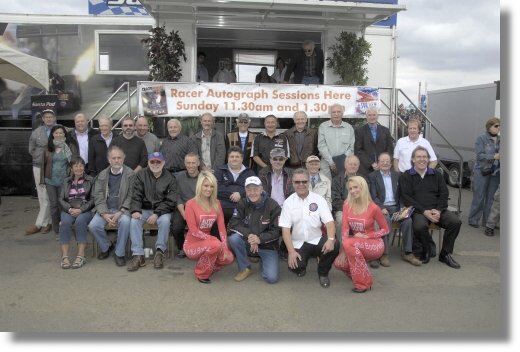
And thanks to Stuart Bradbury of the British Drag Racing Hall of Fame and Caroline Day of Santa Pod for organising it. As well as the copies sold at the track, Crazy Horses shot right back up to No 3 in the amazon.co.uk motorsports titles chart directly after the event. I think the spectators enjoyed having these names from the past at the meet and in turn the legends were amazed at how the sport had developed since they last attended - sometimes this was as long ago as the early 1970s. Goodwood Revival
Hot Rod Drags
Bob Keith publicity USA Plans However, this lack of early promotional support in the USA has delayed sales a little. I have now started to contact the American media direct to make sure they get review copies. Haynes in the UK are helping me achieve this. Richard Parks (Wally�s son) has already e-mailed stories to several important straight line and book review websites. Tony Thacker of the NHRA has offered to organise something at the NHRA Museum during the Night of Champions events linked to the World Finals and the Winternationals. Having never been to these Night of Champions events I would welcome the views of those who have attended as to whether they would represent a good opportunity for book signings. Tony seems to think they get plenty of visitors although not as many as in years gone by. I�m not sure they would be cost-effective trips without other events being added; but I don�t know. And according to Tony they don�t sell books at the track???? Again, anyone visiting a drag meet in the USA this winter keep an eye out. If you spot this rare animal selling books at the track get his website or e-mail details so I can follow it up. Guild of Motoring Writers Awards Facebook Page We hope to put a direct link from the Crazy Horses blog to my Facebook Page, but in the meantime just send an e-mail to me at the address shown on the ACAG website merchandise page (on accelerationarchive.co.uk) and I�ll send you an e-mail from my Facebook page inviting you to become one of my friends (Ah). Otherwise you can log on to Facebook and spool through all the Brian Taylors. There are lots. My e-mail address should help - I think. Well I�m still learning to drive the blinking thing � that�s when I can log on. I think they should call it Face-ache Book.
Hi all Well, with a great review in American Car World and others in Motor Sport and Custom Car, the comments about Crazy Horses are still excellent - all except one that is. This lone negative website review seemed to be more of a vitriolic, personal rant about me, my blog content (sometimes confusing it with the book text), my commentating in the 1970s (evidently side-by-side bye runs should not be explained as such to spectators), the book�s style (referring to Don Garlits as �the American� was considered a sin), the inclusions (writing about the politics that shaped the sport was considered wrong) and exclusions, etc. Ah well! Despite the writer clearly spitting teeth and producing a deafening noise from grinding axes I did manage to find a few points that I can use in the amendments incorporated during the first reprint. We sold a few copies off the ACAG display at the Silverstone Classic event and �5 per copy has gone in the Allard Chrysler restoration fund. One book went to South Africa. But the next big promotion will be on Finals Day at the Santa Pod FIA European Finals over September 12th and 13th. We�re going to have another one of those mammoth signings hosted by Santa Pod and the British Drag Racing Hall of Fame. Drag racing legends from the past joining Stuart Bradbury and myself at the Crazy Horses Club House this time include Dave Stone and Gerry Andrews from the Stones Racing Team. Peter Crane will be meeting up with his old drag racing partner Ray Edmondson for the first time in nearly 40 years. Barry Sheavills plans to be there. Barry was the first to run a 4 and 300 mph at Santa Pod. And of course there are all those racers of today competing in the European Finals. Some of them like Al O�Connor, Gary Page and Krister Johansson have been regulars since the early 1970s and earlier. Andy Carter started in the 1980s. Both Roz Prior and Liz Burn will be there, the two ladies who were in the first side-by-side Top Fuel dragster final anywhere in the world. Tim Claxton is flying in from Spain to join his old partner Norm Wheeldon. In 1979 these two took their rear-engined blown small block Chevy rail sponsored by Wrangler Jeans through to win one of the greatest Pro Comp eliminations held at Santa Pod. Mike Treutlin worked for John Woolfe Racing and he drove a wheelie-pulling injected Chevrolet Topolino coupe called Crescent Coupe. The engine from the original car was a 354 Sid Waterman and it was used in Dennis Priddle�s Quartermaster fuel dragster. From the saloon car ranks we have Kevin Pilling, one of the early 1970 Pro Stock drivers with his Satan�s Toy 1967 Camaro, and Sam Connell famous for his Red Devil Camaro and Nova. Kevin also drove a big Dodge powered altered called Pure Seven. Dave and Sue Coles will be there. They campaigned a series of Chevy engined altereds in the 1970s and �80s under the Helzapoppin� name. Mike Kason drove an altered (Kerbdozer) and a nostalgia dragster in the 1970s and 1990s. On the bike side we have Brian Chapman who will be remembered for his amazing blown eight-second 500 cc Vincent, Ray Baskerville who rode a blown BSA competition bike, but also (along with Peter Miller) developed the UK�s first successful slider clutch for bikes. And Dennis �Stormin� Norman with his blown double engine Triumph spans the period from the 1960�s bike sprinters to the late 1960�s and early 1970�s two-wheeled drag racers. Also racing from the late 1960s and through to the 1980s was Ian Messenger of Pegasus fame. Not to be forgotten are those that organised the sport in the early days. Two of the senior marshals of the late 1960s will be at the meeting. They are Dave Owen and Bob Farrer. Along with the late Captain Tom Hales, Dave wrote the first drag racing rule book to be ratified in the RAC Blue Book. Peter Billinton joined Harry Worrall and Tony Densham in building one of the UK�s earliest dragsters - the 1962 blown 1500 cc Ford powered WorDen dragster. Then, using Mickey Thompson�s Harvey Aluminum Special as a base, Peter, Tony and Fibre Glass Repairs created the Commuter dragster. As a spin off from this Peter formed GMAX, a company that today still supplies fuels to drag racers and others. Along the way he also found time to build Santa Pod�s first Christmas Tree lights and lots more strip technology. Keith Lee was a competitor (Triumph powered motor scooter!!!!), Santa Pod commentator, Drag Racing News and Motorcycle reporter/photographer from the late 1960s through to the 1980s. Along with Roger Gorringe he supplied many photos for Crazy Horses. I�ve just seen version 9 of the European Finals entry list. WOW!!! It�s going to be a great weekend. If you already have a copy of Crazy Horses then bring it along and collect more signatures. If you haven�t then the Pod Shop shouldn�t run out of stock this time so buy one at the strip. There will be two one hour signing sessions held on the Sunday at the Crazy Horses Club situated at the end of the grandstand on the pit side. These are planned for 11.30am and 1.30 pm but listen out for the PA announcements. We are going to auction another signed copy of Crazy Horses over Nitro FM. This is part of a package of items to raise funds for the Allard Chrysler dragster restoration. There will be a similar event the following weekend on Sept 20th at the legendary NSRA Original Hot Rod Drags, the drag racing legends this time being hosted by the British Drag Racing Hall of Fame and Shakespeare County Raceway. The books will be signed at Graham Rennie�s American Auto Mags and/or from the display marquee. There will be a Cacklefest at dusk on Saturday along with a fireworks display. Names already confirmed for this day are Jerry Cookson (I remember commentating on his BMC engine Joker dragster in the early 1970s), Sam Connell, Liz Burn, Barry Sheavills and Brian Johnson who still holds the track record for fuel bikes. Over that same weekend, the Allard Chrysler dragster will be on display in the Hagerty Insurance stand at the Goodwood Revival meet. The car�s profile has risen considerably since the ACAG�s involvement and the established motor sport fraternity have quite taken to the project. ACAG personnel will man the stand. Book signings will be part of the arrangements plus the display and selling of the full range of ACAG merchandise. I will be on the stand during the Friday and Saturday before motoring up to Shakespeare County for the Sunday Crazy Horses signing event. As far as the book�s launch in the USA is concerned I am now in e-mail contact with Haynes Inc and Motorbooks International but I�m still waiting for the final plans to come through. I hope there are some cheap flights left.
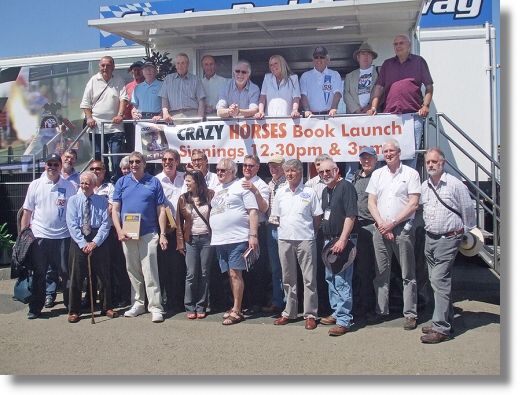
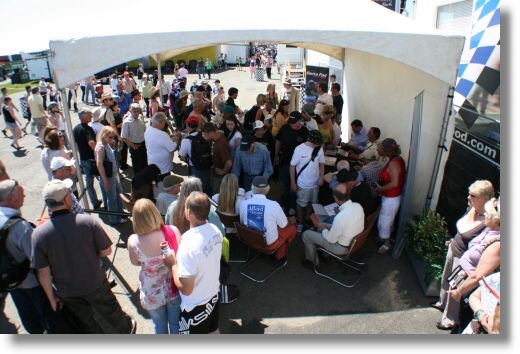
AUTHOR�S DIARY - JUNE / JULY 2009 Hi all What a fantastic official book launch at Santa Pod over the Spring Bank Holiday. Thank you Keith and Caroline at Santa Pod and Stuart of the British Drag Racing Hall of Fame for hosting the event, and to all those drag racing legends from the past who signed copies of the book for the fans. It was probably a good job that the Pod Shop did run out of stock or we could have seen our stars from the past suffering repetitive strain injury. From a personal point of view it was fabulous to meet up again with people that I hadn�t seen for years and who had been such an important part of my life during the 1970s. One copy of the book, signed by myself and loads of racers plus Nick Mason, was auctioned by Nitro FM at the Main Event and raised �200 for the Allard Chrysler dragster restoration fund. Thanks Nigel. Let�s do something again in September.
In fact, the whole day was so successful that Santa Pod want to do it all over again at the FIA European Finals in September. So watch this space along with the Santa Pod website and eurodragster.com for details about who is going to be there this time. Shakespeare County Raceway are also looking at featuring the book and stars from the past at the Hot Rod Drags Meeting held during the weekend following the European Finals at Santa Pod. Looks like the bus passes could be in for a thrashing in September. The book has remained the best selling drag racing book on Amazon.co.uk since it was published and has remained a Top Thirty Amazon seller in their Motor sports category - topping the list on several occasions. The forum and customer reviews have been excellent and so have those in the magazines. Octane, Classic and Sports Car plus local and regional press reviews have also been good. These join those mentioned in the last blog. I did the Judi Spiers� Show on BBC Radio Devon plus a brief appearance on one of the other presenter�s shows. Custom Car is due to publish a review shortly and American Car World have made it book of the month. We sold a few copies at the Hot Rod and Custom Car Drive-In at Beaulieu and �5 per copy went to the Allard Chrysler restoration fund. And we are now getting more details together about the launch in America. More about that in the next blog.
Hi all Well the official launch of Crazy Horses is on Sunday May 24th at Santa Pod during the Main Event. It looks like being the largest gathering of the sport�s pioneers yet with people like John Bennett, Alan Allard, Gerry Belton attending Santa Pod for the first time since the late 1960s, and in the case of Californian Bob Keith his first time ever. They are being joined by many more including Dave Lee Travis, Dave Stone and Gerry Andrews (a Stones racing team reunion), Dennis Priddle, Peter Crane, Roz Prior, John Hobbs and the complete Pegasus team of Ian Messenger, Mick Butler and Derek Chinn. Russ Carpenter and Norm Wheeldon are two more recent additions to our list. Two more bike racer contacts who have confirmed their attendance are Alf Hagon and Brian Chapman. And although he is now in his �80s, Harold Bull of Stripduster fame says he will make it. Harold received the first timing ticket issued at Santa Pod in 1966. There will be several book signing sessions during the weekend and the Pod Shop will have plenty in stock. This really is an occasion not to be missed. Hope to see you there to say hello. I�ve been keeping an eye on the early book reviews posted on the book sales websites and the drag racing forums, and it seems to have gone down very well. In fact I have been overwhelmed by the comments and I�m so pleased everyone is enjoying the read. We�ll now wait to see what the national press makes of it. We made the Telegraph on May 9th with a short but positive review and a jacket picture, and also Autosport on May 14th. We have received enquiries about the availability of Crazy Horses in Sweden. MarGie Bookshop, Roslagsgaten 14, 104-32 Stockholm will stock the book, Tel 08 612 7050 or e-mail [email protected]. I noticed that we even have a presence on a South African book retailing site. Other stockists across Europe are:- Kosters, Denmark, Any other European book retailers interested should contact me on [email protected] and I�ll get Haynes on the case. In the meantime, Scandinavians and other Europeans visiting Santa Pod for the Main Event can purchase the book at the Pod Shop and get it signed by the author, plus loads of the drag racing pioneers attending as well as the cream of today�s European racers. By the way � if you see Crazy Horses on display in your local bookshop make sure you move it so that it is in the best position. It�s good for the sport as well as my royalties!
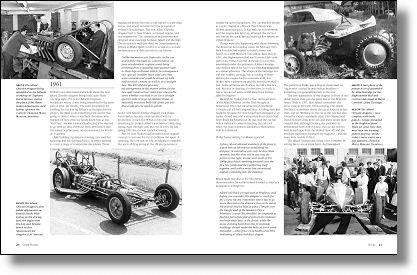
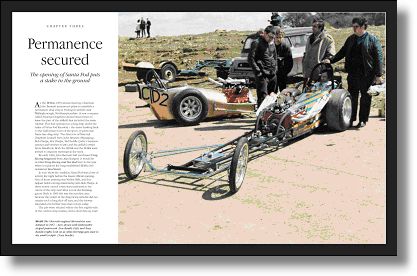
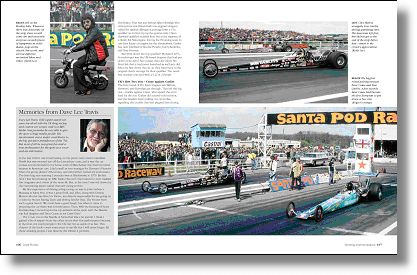
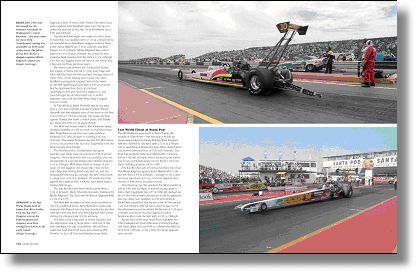
Hi all Well, the time has at last arrived. Crazy Horses � the history of British drag racing, will be published in the UK on April the 30th. As well as spending nearly three years in the research and writing process and hours choosing photographs, ensuring that the end product was the best quality book with good distribution has been a key part of my strategy - all of these important reasons for thanking Haynes for being my publisher. In the bookshops I wanted it to effectively promote drag racing as a major spectacle as it sat alongside other forms of motor sport on the bookshelves. Having signed off the final layout and copy I know it does this - and more. Here are a few spreads from the book as tasters. The black border surrounding pages 54-55 is a design feature signifying the start of a new chapter. Click on each of them to download a pdf file which will be more easily readable but please note they are between 300 and 750KB.
I carried out 37 face-to-face or telephone interviews with racers and organisers from the past, plus many more by e-mail correspondence. I drew together information from four key motor sport archives, 34 different magazine titles, 12 books on the sport and, of course, my own experience. Six different websites were used, including eurodragster.com, theaccelerationarchive.co.uk, timetraveldvds.co.uk, trakbytes.co.uk and ukdrn.co.uk. The 224 pages in Crazy Horses include more than 280 dramatic photographs, 239 of them in colour with many of the images being published for the first time. It is a tribute to the pioneers, a reference for all petrol heads and a darnn good motor sport story for those just wanting to read about the people, the sport�s internal wrangles and the machines. Crazy Horses is already listed on several key book sales' websites and these include:- - amazon.com It will also be available at Waterstones, WH Smiths, Borders and Blackwell shops plus many independent book shops. And of course it will be sold by Santa Pod at the Pod Shop and via The Pod Shop Online. If you haven�t got one of these outlets near you, quote ISBN 978 1 84425 425 5 at your local shop to check if they have it available. There will soon be a Crazy Horses link from several websites that will route you to more details about the title so watch out for this (the links are not connected to the sample page shown). It�s not something Haynes do for all their titles but they are very excited about Crazy Horses and are putting more promotion effort behind it than usual.
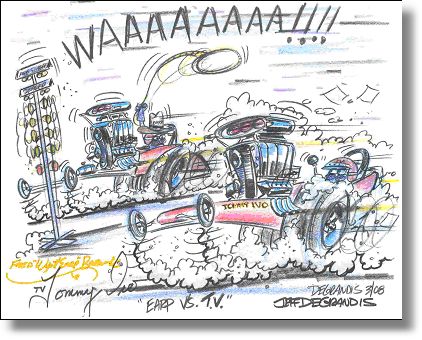
The main launch of the book will be during the Main Event at Santa Pod on Sunday May 24th. It will be a very special day with many stars and personalities of the past there to sign copies, including Bob Keith who brought his Chevy Dos Palmos to the UK as part of the American Team visiting in 1964. This car was left in the country and raced by a couple of teams (who can forget Bill Weichelt?) before it returned to the USA in the early 1970s. Bob returned to captain the 1965 American team, this time with a Chrysler-engined dragster. There will be some signing opportunities on Monday 25th because a few celebrities can only attend that day. We will publish the names of those we know will be there in the next blog and on Eurodragster.com, plus the Santa Pod website will also keep you informed. The book will be published in the USA in August of this year. Haynes North America Inc contracts Motorbooks International to distribute their motor sports titles and this well respected company will be handling Crazy Horses in the USA. The Library of Congress Control no for Crazy Horses (equivalent of our ISBN) is 2008943625. It already appears on one American website - allbookstores.com, but the last time I looked the publication date was incorrect. We will give more details about the American launch closer to publication day, but broad plans are in place to launch the book at the Don Garlits museum in Florida and Fred Babcock has volunteered to round up the 1964/65 American team stars. I will provide him with the contact details of the other American stars who visited us in later years. We hope to put together a West Coast launch as well - maybe more than one. Richard Parks (Wally�s son) is editor of the Society of Land Speed Racing Historians, and he is helping me identify useful distribution channels for the book by including snippets in his bulletins. Finally Fred �Wyatt Earp� Babcock has given me permission to reproduce a signed cartoon featuring himself and Tommy Ivo. Another piece of drag racing memorabilia for you collectors.
AUTHOR�S DIARY - FEBRUARY 2009 Hi all Made contact with a couple of my old partners in crime over the holiday period. Mike Startup was my partner in Taylor Startup International (TSI) and we had a good chat about the old days. He still has lots of film with magnetic sound taken at Santa Pod in 1972 and he is going to dig it out to see if we can do anything with it. He also has lots of colour transparencies. I also spoke to Kenneth Alexandersson in Varg�rda, Sweden. Kenneth was the sound recording engineer for many of the Quarter Mile Machine audio tapes made by TSI in the 1970s. He and his wife Carina were often our hosts when we visited Mantorp Park. The book has been laid out by Haynes Publishing using Page Builder. The text, photographs and captions are now ready for final proof reading and I am expecting my copy today special delivery. Nick Pettitt has agreed to be my second pair of eyes at this stage. It�s getting exciting now. I�ve already noticed one pic caption that will need adjusting. It shows DLT in the final of Pro Fuel Dragster when he beat Mickey Naylor. It also shows Mickey�s blower at a very jaunty angle having parted company with the engine. I somehow think I need to refer to that. I�ve also been busy doing the jacket text. The official book launch is planned for the Main Event Meeting held at Santa Pod over the Spring Bank Holiday at the end of May. Sunday will probably be the main day for book signings with many of the stars of the past and present autographing copies. American Bob Keith has already booked his flights; Bob was the driver of the Chevy powered Dos Palmos in 1964 (the car that ended up with Bill Weichelt). He was Captain of the American Team in 1965 when he had a Chrysler version of the car (pic below). This car has been restored and is in Australia. More details will be announced by Haynes and Santa Pod as the final plans are agreed. It will be a great weekend � one not to miss.
I was very honoured to be asked to join the British Drag Racing Hall of Fame Selection Board and was looking forward to paying tribute to John Bennett when the 2009 inductees were presented with their awards at the recent Drag Racing Trophy Presentation Evening held in Northampton. Somehow, John�s role had been airbrushed out of the sport�s history so it was a chance to rectify this � even though I was a spectator when John was heading the show and not involved in the sport�s organisation at that time. Unfortunately the snow and ice prevented it all happening as planned. John had flown in from Spain for the evening. Unfortunately he couldn�t get from Crawley to Northampton. It also stopped Alan Allard getting across to present the award. He was marooned in the hills where he lives near Monmouth. I was stranded in Devon. What a bummer! The plan is to present John�s award at the Main Event in May. I was relieved to see that John Sergeant on ice �Tod Tucker Carthy� got kicked out of Dancing on Ice last weekend. But I�ll be pleased when the weather improves because I really must get out more.
AUTHOR�S DIARY - NOVEMBER 2008 Hi again Phew! What a month. Before I get you up to speed with the book, a few notes about some recent e-mail contacts. Steve Stringer got hold of me from Texas. Some of you will remember Steve with his yellow V6-engined Cortina called Twister and his amazing customised vans at the Custom Car Shows. Although his health is not so good these days, he is still very much involved with drag racing modelling funny car designs. Received some more e-mail correspondence from Angelo Di-Tommaso whose father owned the �57 Chevrolet Super Pumpkin back in the 1970s. His father prepared a special 60th birthday picture for his best pal Colin Mullen and they have given me permission to include it in this blog for all those memorabilia fanatics out there.
Now for Crazy Horses. The final manuscript is at last with the Haynes Publishing editor who is trawling through it right now. He will have great fun with all those Scandinavian names. I�m currently making the final photo selections and preparing captions and these will be delivered to Haynes next Friday. Their editor will then go through the captions. It�s worth mentioning the logistics of this part of the project because it�s almost as complicated as writing the book. The next key stage is the layout and this will be when I will become involved again as it will obviously affect pagination and indexing. There may be some photos to dump or maybe some to add. Certainly the final spell-check and my read through will be carried out then to ensure the right pics are in the right place and the captions are correct. The planned publishing date is April 2009. I�ll keep you posted with the details of regional and local book signings and launches. It�s not a bad year to publish because 1959 was when the Highwaymen Rod and Custom Club was formed, and under the guidance of Brian Coole this became the furnace that moulded the British Hot Rod Association � so the book is being published on a 50th anniversary. That�s all for now because Strictly Come Dancing is about to start. I hope they get rid of John Sergeant this time.
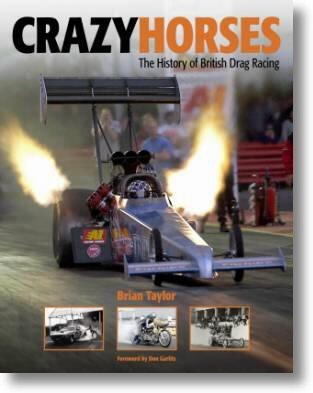
Hi again Heard from Cliff Jones since the last blog. Cliff has been a resident of California for many years but the grey-haired among us will remember him from the late 1960s and early 1970s. He was an early supporter of the NDRC and like Peter Bennett became a sort of Arthur Daley of drag racing machines - buying, selling and racing all sorts of cars. Dave and Dennis Stone obtained Opus One from Cliff. And it was Cliff who purchased the Crescent Coupe rolling chassis from John Woolfe Racing who had purchased it from Pete Millar in Sweden to get hold of the Sid Waterman engine that was required for Dennis Priddle�s Quartermaster dragster. Cliff than raced Crescent Coupe with an injected Chevy in place before selling it on of course. He was one of the NDRC commentators when I first got behind the mic at Blackbushe in 1970. Someone else who has been in contact is Tony Russell who was one of Tony Brown and Jack Stillwell�s crew for the Jaguar powered Limelight dragster of the late 1960s. It really was a gem of a car winning show and go awards. I have now cut Crazy Horses back to 250 pages and 112,000 words. I just need to lose another 12,000 words or so and I�m there and the selection of photographs can be completed. I estimate I�m about two weeks off that point. I�ll have to publish an �out takes� book. Haynes Publishing have had sight of the first two Chapters of Crazy Horses and are well pleased. I�m glad about this because the book has turned out to be quite different from the original synopsis submitted two years ago when the project was started and the publishing contract signed. The same elements are included but the style and individual chapter content is quite different. The front cover has been designed and approved. I have attached it to this blog. You will notice that the complete title has been changed from 'Crazy Horses � British Drag Racing�s Heritage' to 'Crazy Horses � the History of British Drag Racing'. This was at the publisher�s suggestion after reading the first two chapters and is a clearer description of what the reader is buying. The main photo is a Roger Gorringe pic featuring Barry Sheavills. The others are of Money Hungry, Pegasus and Mooneyes at Brighton. I remember Barry starting out with his brother in 1970 driving a Lotus Cortina, then buying the Jaguar-engined Stagecoach Austin Ruby and developing it with a Pontiac lump. He later moved on of course via the 5-window Plymouth and his Camaro. He switched to Pro Comp and then to Top Fuel where he carved his name in the sport via nailing record setting four second and 300 mph runs at Santa Pod. And he is still driving Top Fuel cars today � given the chance. So although there are many others who could have made the front cover, it is fitting that one of Barry�s cars has been selected. Roger�s photo does it justice and it should really show out when on display in the shops.
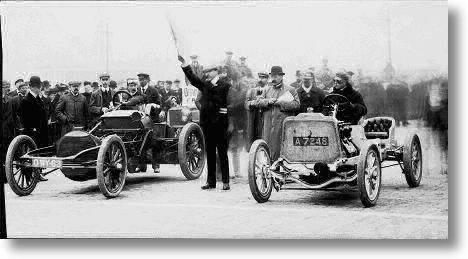
I�m still going to use the black and white pic used at the top of the blog showing Mickey Thompson and Dante Duce at Debden in 1963. It was a seminal race and that�s Dean Moon in the centre who did the flag start. As such it has to be featured in the book. We�re still aiming for a Spring 2009 launch. More next month.
Hi again I think my eyes have gone funny editing the Crazy Horses manuscript. I�ve now cut back the text so that it currently comprises of eight chapters and takes up just over 500 pages (down from 1000 pages remember). It has a beginning, a middle and an end, so in that sense it is now a complete document. My next stage is to cut it back to 250 pages. Since my last blog I have been in contact with Bob Keith. He tells me that his 1965 car is being rebuilt in Australia. Kent Fuller is building a replica chassis. Bob also hopes to come across to the UK next year so I will try and drag him up to Santa Pod. Someone else who has made contact from the same era is Paul Hicks. He and Clive Lingard were early BHRA stalwarts and founder members of the Dragons Hot Rod Club in Manchester. And guess what - he took some great colour pics of the 1965 Drag Fest and the first BHRA Big Go at Duxford. He has sent me the best ones and they are really good. I interviewed Lee Childs last week (pretty convenient because he lives in Devon as well). He was able to fill me in with a bit more detail about the Custom Car Street Eliminator and his days of promoting meetings at Shaky. John Price has kindly written the chapter introduction for the period covering 1981 to 1988. Well somebody had to and he was there most of the time. In fact he still is there - a sort of omni presence - with experience of Santa Pod and Shaky. Haynes are now designing the cover of the book so I�m looking forward to seeing that. And they are preparing their advance information blurb that is used by their sales team to line up advance orders. So I�d better get back to pruning my 500 pages of text. Before I sign off here is a bit more drama from the past. First a story about Alf Hagon�s �virtual� first nine second run at the RAF Gala of Motor sports meeting organised by the NSA at Debden in June 1965. Based on his recent performances hopes were high that Hagon could break in to the nines. There was some controversy early on as times were much quicker than expected, and timekeeper Allan Nash suspected something was not quite right. A tape measure was used to check the measured quarter mile. This took some time, but while it was going on Alf Hagon continued his performance gains (or so he thought) with a 10.06 run that saw the bike leave a rubber mark from his smoking rear slick for the full distance. Alan Burgess of Drag Racing magazine reported the next run. Jack Parker called for Alf Hagon to make his second run. This was the moment for which everyone had been waiting. Hagon�s recent times with his bike in blown form had been getting quicker and quicker. It looked as if, given the right conditions, he might be the first man to break 10 seconds and his earlier 10.06 confirmed the sprinters� �bush telegraph� expectations. Today would be the day. As he came forward for his second run the idling note from the big JAP was even more urgent as he held it on the line for a few brief seconds. As he let her go we had the full Banzai treatment - the motor kept a tortured note and stayed on it with Hagon�s legs trailing like streamers in the slipstream. It looked as if the machine had complete control with a mere mortal fighting to stay on by his finger nails. As he shot to the end, the crowds had already started running towards Nash and his timing equipment and were six deep in seconds waiting for the word. 9.96 seconds and 148 mph came from the beaming timekeeper and the spectators and other riders went mad. There was much back slapping, cheering and exchange of money as private bets were settled. Hagon was photographed with the clocks showing the historic time. However, the celebrations were curtailed when Phil Manzano and Phil Roper confirmed that the quarter mile track was indeed twenty-six yards short. Oh Dear! Or words to that effect. But Alf had clearly shown that his development programme was now bringing results. If he recorded 148 mph on a short strip, what would the terminal speed have been for a full quarter mile? Here�s another one. This time the 1965 Drag Fest round at Woodvale that saw the UK�s first 200 mph runs. The final was between Buddy Cortines and Danny Ongais, but Ongais had blown a clutch during his semi-final win and was having trouble making the line in time. It was all hands to the pumps as Bob Keith, Nick Colbert and Buddy Cortines all helped out. The meet curfew time of 6.00pm had come and gone. Light was fading fast and the RAC steward had given a final two minutes before closing the meeting. When both cars were ready it was really getting quite dark. In fact the course cars had their headlights full on and the chequered board marking the finish was not visible from the start line. The finalists wre pushed up the strip, turned round and fired up. Denis Jenkinson describes the scene. "Right at the end of the day, when darkness had almost fallen, Ongais came out of the paddock and joined Cortines, who had been waiting, and they came up to the line, engines running and all set for the big final. The sun had long since gone down, and in the dusk the stub pipes of the dragsters blew out multi-coloured flames, with strange greens and blues flickering eerily. "The starter leapt in to the air with the �go� flag, Cortines shot away, but Ongais did not move. The front of his engine was literally sparking like phosphorus, as the elecktron casing of the blower manifold burned, for it had split wide open as he blipped the engine for the take-off. "The Fire Brigade soon smothered everything with foam, in the meantime Cortines had disappeared into the gloom at a fantastic rate to set an FTD of 7.74 seconds at 201 mph. It was an incredible climax to an exhibition of true professional drag racing, run in all seriousness by eight very fast and brave drivers. If this is drag racing then I feel we could do with a lot more." Amen to that.
Hi again I�m still glued to my computer screen, really concentrating on cutting the story back to fit the book brief. Nick Pettitt has been very helpful reading the detailed copy I have sent to him. This has clarified a lot of puzzling episodes and I will be down to 500 pages by the end of this month. At that point I will ask the Haynes Publishing editor to give me guidance for the final edits. They will be wondering where my manuscript has got to. But this exercise has been very beneficial. As the broader picture of change has emerged, some of the points gathered during the initial research that I had previously highlighted in my early thoughts as being key events have now faded to become fairly insignificant. The text has become a very human story about people and their aspirations for a sport they loved � and how many of these aspirations were thwarted by events outside their control. It�s also about the constant political and commercial battles between rival bodies that many believe has held back the sport�s development. And it�s about the anarchic growth of the sport throughout Europe � particularly during the late 1980s and early 1990s - that further depleted UK drag race event entries although they did give those racers attending these overseas events a useful revenue stream during tough economic times. It�s certainly not just about the machines � although they of course feature strongly. One visit I have made since my last blog was to see Sylvia Hauser. Sylvia first attended a drag meet in 1973 and she was hooked from then-on until she decided in the mid 1980s that having children was good too. I now know the truth about the Penthouse Magazine spread and how she swapped her Triumph Spitfire for her first Dodge Charger that she originally called Mother Trucker. The BDR&HRA banned the name after a couple of meets but I do remember commentating on it and using that name. I also remember those hot pants when she was Peter Crane�s �bleach babe�. Being as I haven�t got many current research stories to tell you since the last blog due to being chained to my computer, I thought I would include a longer article published in 1972. During that year, L J K Setright, one of the UK�s most respected motoring writers, visited Santa Pod for Custom Car Magazine. I loved his writing so sit back and pay attention. �Sprinting, I now see, has absolutely nothing to do with road driving. It is a science, and it is a sport. That is all it should be; better still, it is very nearly unspoilt by commerce (presumably things are different in the USA, where the sophistries of the professionals have a way of degrading an activity in proportion to the splendour of its organisation and presentation), and the spirit evident among competitors and spectators was a refreshing one. Best of all, it is not yet a too popular sport: crowding and friendliness do not go together. �There are one or two things about drag racing and �rod-heating� that I dislike; but this is no more than the old crusty Setright showing through the new open-minded post-Pod Setright. The funny cars and altereds for instance, and all the inept applications of production bodies (anything from a Ford model T to a GM Camaro, including a Fiat 500 Topolino) to chassis that are entirely irrelevant and unrelated, strikes me as not only tasteless but also pointless. �A dragster is a work of art, but the driving of it is a necessary part of the art form; for only when it is in motion does the gormless-looking contraption become the coherent expression of purpose. It is not merely an objet d�art, a piece of art; it is a work of art � and by definition work demands force and movement. When it is static, it is merely an assembly of raw materials required for the artistic creation that follows the green light. �When a dragster is exerting all its forces, and moving with all of its ability, it is fulfilling itself, justifying itself, coming to life as a kinetic sculpture. The beauty of a good run is something special in art, something ephemeral that can never quite be repeated. It has the evanescent quality of music � especially improvised music. The pure dragster that leaps away from the lights is a satisfying thing to see. The pure dragster surmounted by a Tin Lizzie or a Ford Popular body is no less admirable from the ground to the girdle; but from the waist up it is something else, something inconsistent with the object of the exercise, something that is wholly at odds with the kinetic experience of the vehicle. The funny body is a static thing, for there is about it nothing to suggest dynamism. In terms of art, it is as ludicrous as a silk topper on Michelangelo�s David. This sublime lack of concern for aerodynamics in drag racing and sprinting concerns me. Maybe that is why it is called drag racing? �Perhaps our current drag racers do not really care. From the look of their machines and the performance of the drivers, I gathered the impression that the men who build cars for the drags are concerned entirely with the mechanical and styling aspects of the vehicle. Those who explore the chemical benefits of oxygen rich fuels such as nitro go a bit further, but not much. �In fact it is probably too early for the chaps to set about exploiting the possibilities of better shapes, structures, transmissions and suspensions. Before they spend time and money on these, they could improve their results a lot by attending to themselves. Time after time I saw precious ages being squandered on the starting line, as the message of the green light sank slowly, like some elemental particle declining in its Brownian motion through Silurian ooze, into a goggled and helmeted consciousness sitting there at the wrong end of the clutch mechanism. Attention to technique at the lights is probably the most pressing technical requirement for most competitors.� Despite criticising the design of some of the vehicles LJKS goes on to somewhat contradict himself by complimenting the sport on the variety of machines competing. �Adding to the pleasure is the variety of machinery � in contrast to the stereotyped designs filling the programmes of any other kind of event from hill climbs to Grand Prix races. It is as much because of their elementary approach to problems, as because of their refreshing and progress-promoting freedom from unnecessary and stultifying regulations, that there is so little unanimity among sprinters. Some go for power, some for lightness; some for single gear transmissions, some for multiples; some move off the line with the consumptive smoothness of a converter coupling to aid them, others affect the sort of sudden-death clutch that will give you either a record for the long jump or a broken neck. I like to see this sort of exploratory approach, encouraged by regulations open enough to admit the passage of a carriage and four; it is this deliberate anything-goes policy that fosters new discoveries, and makes motor sport a fertile pleasure-ground rather than a febrile scratching for loopholes.� LJKS also commented on the mix of show and go that is a feature of drag racing. �Revolution III arrived at the start with so many forward and back shuffles, such a lot of frenzy from the public address system (which had clearly been in desperate need of something to get frenzied about), so many hangers on, pushers, observers, ministers, and support vehicle crews, as to create an extraordinary air of excitement. This, I thought, must be the prelude to that under 7 second run that has been confidently forecast. This, I hoped, would be a noise really worth hearing. Then the monstrous thing puttered away up the road from a rolling start, just running in and checking out for tomorrow. So I feel it has cheated me. �Of all the competition altereds, Stripteaser was the most intriguing. One does not expect to see a Mini in such company; and when it squats on huge rear tyres, makes the nicest noise of the day; and goes like stink, there is clearly some justification for thinking it peculiar. But how neat, how reasonable, how antilogically obvious to put a Jaguar engine inside! And how well it went seemingly one of the very fastest four wheelers because at any given speed it would cover its own length in less time than any of the longer cars.� Blimey! And you thought it was just a race between some very amusing and powerful machines. Mind you, as race commentator at the time I know what he meant about feeling cheated by an unannounced check-out run. Next blog in July - ish.
AUTHOR�S DIARY - MAY 2008 Hi again Since my last blog most of my work has been computer-based. At last I�m on to the first stage of cutting the detailed story back to fit the book brief. In practice it means reducing 1000 pages of text to 500 pages. I�ll then prune it again to about 250 pages. Doing it this way helps get the balance of the book right. I have received the final copy for the chapter introductions from Roy Phelps, Dennis Priddle and Carl Olson. I have also added new information received from Clive Skilton and Tony Beadle after they had read drafts of the story. And details covering the more recent years are being taken from the event coverage section on Eurodragster.com. I�ve still a few folks to see and their info will of course be included. Currently both Nick Pettitt and Tog are going through the latest 1000 page draft. All of their comments will be included in my final book draft copy where applicable, and in the detailed history when I return to it after getting the book draft signed off by Haynes. I feel I should mention the fact that since the last blog we lost Tony Densham and discovered that we lost Dante Duce in February. Duce was fairly unknown in the USA, even when he first brought Mooneyes to the UK in 1963 and when he captained the 1964 Drag Festival team that included such names as Don Garlits, Tommy Ivo, Tony Nancy, etc. But it was Duce who made the call to Sydney Allard challenging him to a match race in 1963. Because he ran a Speed Shop in Las Vegas he had become friends with Dean Moon, his first supplier, and when he told Dean about his trip, Dean persuaded Revell to loan back his Mooneyes gas dragster for the trip rather than use Duce�s own rail that he raced at local tracks. At the time Mooneyes was being used to promote a model kit of the dragster. Mickey Thompson discovered that Dean Moon was involved, and because he didn�t want to be left out he invited himself along with his nitro-burning Harvey Aluminum Special. After 1964, Duce went back to running his speed shop and remained fairly unknown in the USA, which is why we didn�t hear about his death until recently. I last spoke to him on the telephone before Christmas when he was at pains to stress how important it was that Sydney Allard�s role should be recorded in my book. It was a lengthened but completely new version of the Harvey Aluminum Special chassis that became the base for Tony Densham�s most famous car � Commuter. Tony, Harry Worrell and Peter Billinton had run the four cylinder Ford-powered WorDen dragster for a while. This was probably only the third or fourth dragster built in this country. In 1966 Bob Phelps and John Bennett asked if they could do anything with the old Harvey Aluminum Special that was rusting away in the Fibre Glass Repairs workshop, having been left in the country after the 1963 match race demonstrations. The first attempt was The Golden Hind. This was mostly a copy of the Special using a handful of original bits, but they soon found out that the design was out of date. Using the chassis blueprints as a base for a lengthened version, and with the addition of that wonderful fibreglass body built by Roy and Bob Phelps, they gave birth to Commuter. Tony entertained us for many years, particularly being remembered racing people like Clive Skilton in the Allard Skilton and Dennis Priddle/Rex Sluggett in Tudor Rose during the late 1960s. He picked up several World Records along the way. Antony Billinton�s rebuilding of Commuter is a great tribute to Tony and this will ensure he is remembered by drag racing enthusiasts. However Duce�s important role should also be remembered in some way but I�m not sure how. The Mooneyes dragster is in the Garlits Museum. But that was Dean Moon�s car. And anyway, Duce�s main influence to the sport was over here � not in the USA. Perhaps someone can come up with an idea. Naming one of the sport�s major trophies after him might be fitting. As is traditional with my blog I like to end on a light-hearted note. This time it�s a story from Clive Skilton. It might be considered a bit politically incorrect these days but I offer it as a story and not as a joke because Clive swears it�s true. In the early 1970s he had moved the race car operations from one of his Vauxhall dealerships to a farm building owned by Edwin McKnight. Clive and his team were returning the Second Revolution dragster to the farm one Monday after a weekend at the drags. Edwin had an Irish bricklayer working on a wall and as the team pulled in he clocked the long trailer and asked what was in inside. Clive invited him to look inside the side door of the trailer and the bricklayer said, �To be sure, �tis one of the acceleration machines. How fast will it go?� Clive answered, �See that tree over there � well it will go 200 mph when it gets there�. The bricklayer then wanted to know how Clive stopped the car so the rear door of the trailer was opened to make the chute visible. After a long silence the bricklayer said thoughtfully, �Well that�s all very fine. But what do you do when the wind isn�t blowing�. Back to the computer now.
AUTHOR�S DIARY - MARCH 2008 Hi again I�m just recovering from Santa Pod this Easter. It was COLD. I mean cold enough to shrivel your injectors. The last time I remember snow at Easter was back in the mid 1970s. I know it has happened since then but at this time Taylor Startup produced and sold the programmes for NDRC meets and at the first Good Friday meet we woke up to snow on the ground at Snetterton. I had 2,500 programmes in the back of my Ford Cortina estate to sell. As luck would have it the sun came out and the snow melted quickly. The sandy soil at Snetterton helped drain away the wet stuff and we managed to sell enough programmes to break even. I�ve been continuing my research for Crazy Horses. Bo Meftah was someone I did not come across during the time I was involved in the sport. He and Don Brister owned Santa Pod for a short period during the early 1990s so it was useful to speak with him. He now runs a small chain of flooring shops in London and I spent around two hours with him over a pasta in a restaurant close to his Kings Road shop (Bo paid). He was able to fill in quite a few gaps in my knowledge of this period � particularly about why he and Don became involved in the first place, what went wrong from his perspective and how it all ended. I had a second interview with Roy Phelps and was able to fill in more details about his on-going battle with the sport�s organising bodies. Getting the balance right between what racers want and what spectators want has been difficult for all promoters and organising bodies. And trying to run a business based on a hobby has not been easy for anyone. He also told me how he came to sell his shares in the operating company to Bo and Don after they had bought the land from Ernie Braddock. Roy�s Achilles Heel had always been the fact that he did not own the land. He was just the tenant and this restricted the development of the facility. But even with this manacle, he and his family have managed to steer the sport through some very tricky years and they deserve credit for it. This restriction did not apply to Bo and Don or to the raceway�s current Chief Executive Keith Bartlett. Hence they have had more control over their destinies. That�s not to say they haven�t had other hurdles to clear. I met up with Dave Prior and his daughter Lesley. The last time I met Lesley she was still at school and I never did see her race. But Dave and I go back a long way because we were both sales representatives with the Kelly Springfield Tyre Company. I spent over two hours with them because I was particularly interested in the European Show circus that Dave developed. He wasn�t the first to show drag cars in Europe but he built a series of contacts by word of mouth and some cars spent most of the winter on tour. This was an important revenue stream for the racers concerned and it was in many ways the trail blazer for the developing European drag racing scene. Show visitors saw the cars at the shows and wanted to see them race. One of the other topics we discussed was the infamous trip to Valencia organised by a Belgian promoter and Keith Parker. Someone should write a book on this trip. I�m certainly going to give it a mention in my book because it shows how things can go wrong on these trips abroad. They were not always money earners. As the story unfolds you start to think surely nothing else can go wrong � and of course it does. I had lunch with Dennis Priddle to start preparing his introduction to one of the chapters in the book. As always with Dennis lots of other info comes up in conversation so there was plenty of cut and pasting to do on returning to my computer. But while I was at his workshop I spotted the bug catcher for the Mr Six dragster that he is getting ready to cackle. He wouldn�t show me the car because he wants to finish it first. His current target date is to have it in display form (at least) for the Festival of Speed at Goodwood this year. You heard it here first - probably. And Ron Johnson, the man who recreated Tommy Ivo�s Barnstormer dragster that visited the UK in 1964, is also down to attend this event - at the moment. Keith Bartlett gave me some more time over Easter, and as well as talking about the changes he made during the first few years of his tenure and why, I was able to get some more information about his strategy for building the sport and the next big challenge. He is the first to admit that not everything he touched has turned to gold. But if you don�t make mistakes you are probably not making decisions and he is very bullish about the future. As you can see from the topics covered by my latest interviews I am now coming towards the end of the initial research period. That�s not to say that I have finished the research, and as new information becomes available I will log it. In truth the detailed research period will never end. But the time has come to start cutting back the 1000 pages of text that I now have so that I have a draft that fits the Haynes book brief. Extra relevant information will still be included during the final edit and I still have people to see, but my first book draft must be with Haynes by the end of May and I have given myself two months to do this. Once this draft has been accepted the task will be to liaise with the Haynes editor on style, layout and photos. I will also get back to complete the detailed history so that it can be drawn on as a reference. The other big story associated with the book has been the creation of the Allard Chrysler Action Group. Because this is now a separate and rapidly growing subject I have prepared another blog for The Acceleration Archive and this will be updated as the project progresses.
AUTHOR�S DIARY - FEBRUARY 2008 Hi again, It�s been a pretty busy period researching the book with lots of interviews as well as other research. You will remember I was trying to find out whether Paula Murphy did a flame burnout in the STP Duster at Santa Pod in 1973. Well, Paula thinks she did, as did one of her mechanics Rob Schlorer who contacted me via e-mail. Nobby Hills was shadowing the team in advance of taking over the running of the car and he certainly cannot remember a flame burnout. I have yet to see a photo of it happening so we are not much further forward. I�ll keep on the case. At the Autosport International Show in January I interviewed Jerry Cookson about his early memories and his association with Long Marston aka Avon Park aka Shakespeare County. I filled in a few gaps and he loaned me lots of back issues of NDRC News, Pro Drag News and European Dragster. These have proven to be really useful. I also had my first interview with Keith Bartlett who took me through his early drag racing involvement and then through Slick Tricks Racing, Lonsdale and the start of ETFA, right up to the time he purchased Santa Pod. If today�s racers got up to some of the tricks he did back in the 1970s he would throw them out of the venue. But that was then and now is now. I won't go into detail, but enough to say that once someone is strapped in with a crash helmet on it's difficult for a marshal to tell who it is belting down the fire-up road. I might have commentated on him racing and not been aware of it! I also interviewed Andy Carter and this was really interesting because he was able to add a lot of colour to the early Gary�s Picnics, Doorslammers and then Outlaw Anglias. I also logged more details about his move into the Top Fuel Dragster class. He has since provided me with some great photos. In line with this �street racing� route to drag racing I interviewed Gary and Sandra Healy and Gary Junior. Gary Senior sells shoes these days and Sandra and Gary Junior look after the American car business. But I managed to nail them down. In fact the two Gary�s joined Maurice Takoor and myself at the Holiday Inn Express in Battersea. Maurice brought along lots more photos and documents covering the very early days and we spread them around the dining area and at one time we took up five tables. It was great talking to Gary and the early 1970s when he and Sandra started out Gary�s Shack in Battersea. It was this business that was very much the instigator of the local cruise that became the infamous Chelsea Cruise. And amongst the letters that Maurice had in his boxes was correspondence proving that the BHRA was in existence before John Bennett became involved. This bit of information, combined with more e-mails between Peter Bartlett and myself, meant a bit more cut and pasting to my UK Roots Chapter. While we are on these early days I was able to meet up with Brian Sparrow again and start going through his many early photos. I was able to qualify another bit of history. It was because Brian had dated some of his very early photos. One of these was the first hemi dragster built by Brian Witty and taken to Long Marston in 1962. It was ugly. In fact, come to think of it, we used to do ugly quite well back then. But the significance of the photo and the date means that this was the second UK dragster (after Sydney�s Allard Chrysler). Bootsie�s Buick came after this at about the same time as the WorDen dragster of Harry Worrell and Tony Densham. Fortunately Witty�s ugly hemi was dumped and work continued on the Buick. Witty brought out a more attractive (not much) Ford overhead valve V8 dragster later. Despite what some existing �histories� might state, there were no UK dragsters running before Sydney Allard�s first Allard Chrysler early in 1961. I also interviewed John and Liz Ledster. Fortunately they were spending time in their Devon cottage so I didn�t have too far to travel. They were able to fill in some more details about the early RWYB, Gary�s Picnic and Doorslammer meets at Santa Pod. Liz was organising many of the early 1980 RWYBs and was then joined by Carlo and Sue Gandolfi. But I have still not managed to pin a date when the SPRC became affiliated to the RAC. I think it must have been in the mid to late 1980s because I have seen an advertisement for the Street Machine Grudge Meet (thanks to Brian Pateman) that asks those wishing to enter the RWYB to apply to Santa Pod Enthusiasts' Club and those wishing to enter the Saturday Night racing to apply to the SPRC. In the latter they state that an RAC Competition licence is required. Of course this does not mean that the SPRC was RAC Affiliated. And it is made a bit more complicated because the SPRC was restructured after Don and Bo took over Santa Pod. It was certainly RAC affiliated at this time. I�ve got Phil Evans trying to track it down at the moment. Any other info on this would be welcome. It is important because it marks the change from the �illegal� racing at RWYB type meetings to �legal� racing. The description �legal� and �illegal� are in perceived RAC terms. The RAC threat to withdraw Competition Licences from those caught �racing� at these RWYB type meets was probably a paper tiger threat. David Dibley made contact after my last plea for early copies of NDRC News from the 1970s. David was a regular dial-your-own Roadster class racer and he had a complete set covering the 1970s and has kindly loaned them to me. This is gold dust and will enable me to fill in lots of gaps. He also had a set of early NDRC race programmes (some Taylor Startup ones I�m pleased to report), and early DRNs. I think I have already read most of the latter but I may find a few that my earlier contacts have not managed to acquire. I wont know until I get stuck in. Another person I was able to interview was Tony Beadle � a fellow member of the Guild of Motoring Writers. Tony and his brother Don go back to the late 1960s and he was able to help out with lots of detail and supply me with a full set of the magazine he edited called UK Drag Racing (not to be confused with Carlo�s Drag Racing UK that I have already read). He was also able to help me out with this RWYB development, the Rover V8 series and the Street Machine sponsored Street Racing Championship. When I�ve finished going through UK Drag Racing he has a complete set of National Drag Racers that I will start ploughing through. He also has a lot of photos. I�ve mentioned photos several times in this blog. It is something I am now getting serious about because I have enough editorial to know some of the cars, bikes and events of which I would like photographic references. Via Nick Pettitt, I tracked down Ron Fisher (one of the Wild Bunch) who has a good range of colour slides going back to 1965 at Woodvale and covering the early 1960s at Santa Pod. I have had to blag a viewer to start going through them but already I can see there are some good ones. Peter Quinn sent me a selection of his excellent photos � colour and b/w � taken in the early 1970s. Lawrie Gatehouse is sorting out some of his. Alan Holland-Avery is going through his contact sheets. Until my phone call to Alan I hadn�t realised that we were Engineering Apprentices at British European Airways at the same time. As I entered my first year Alan was in his fifth. I have made contact with American Fred Babcock who has given me permission to use his photos taken during the 1964 Drag Festival. These include colour and black and white. I have also tracked down the Michael Cooper photos taken during 1964. As many of you will know, Michael was one of the UK�s leading motorsports photographers. But as far as I can tell, in drag racing terms it was only the 1964 Drag Festivals that received his creative attention. I traced him via the Guild of Motoring Writers (photographers are members as well) and found out that he died some two years ago. But his wife is keeping up his library of photos and she has located the negatives of the Drag Festival work. I can�t wait to receive the contacts. I visited the Beaulieu library again and identified many more photos I want covering early sprints and the Drag Festivals. These are being processed now. Keith Lee had found quite a few photos that he is going to show me shortly. Keith joined me in the Santa Pod commentary team during the 1970s and was a regular scribe/photographer for several publications. And Roger Gorringe, who is providing the majority of the photos covering 1972 onwards, has been really busy producing contacts with hundreds of his colour shots as well as black and white shots. While at Beaulieu I had a meeting with Doug Hall who is the Museum Manager and Chief Engineer of the National Motor Museum. This followed correspondence between myself and the Lord Montagu. If all goes well I will be releasing some special news that will be of interest of all those interested in our sport�s history. It�s been a bit of a long blog this time but I hope you found it interesting. But as is my way I like to end it with a piece of journalism published about our sport in days gone by. This dates to 1973. By this time, driven partly by sponsorship from the world of pop music, we had started to use music as part of the show at Santa Pod. We ran the commentary in the style of a radio station with music behind the commentary and as a feature during down-time. We also started to use fanfares to introduce the main finals. Initially, much of this was done using a single record deck provided by Peter Billinton!!! It was quite a challenge on hot days when the vinyl began to warp in the heat. But gradually we used taped music that I recorded at home during the week preceding the race � transferring my vinyl onto cassettes for the race meeting. Copyright wasn�t such an issue in those days. The atmosphere we were looking to create was that of an automotive party and celebration of speed. In most cases I think we hit the button and it seemed the right approach in those days. Probably not so �cool� today. Simon Taylor wrote an interesting review at the end of 1973. It�s interesting because it was the view of an outsider rather than a journalist within the drag racing fraternity. British drag racing still has a quaint flavour all its own. Some rather appealing minorities go to watch. There�s the Ted �n Rocker group who might have stepped straight off the set of That�ll be the Day � authentic 1950�s knee length jackets, thick soled shoes and greased duck�s-arse hair. There are the Americophiles with short haircuts, straw Stetson hats, broad-striped jeans and a stock of American phrases rolling rather awkwardly off their Wimbledon and Solihull tongues. There are threatening-looking East End car dealers specialising in 1965 Oldsmobiles with L registrations. And there are a few real Americans, servicemen stationed in this country, who lend an air of authenticity to the proceedings. There�s even a small fairground to complete the picture � I expect to see David Essex and Ringo running the dodgems. The background music continually playing over the loudspeakers, even when the commentator is talking, is appropriate too � 1950�s rock �n� roll, Elvis, Jerry Lee Lewis and the inevitable Beach Boys, several of whose songs include drag racing references. The commentator works hard to reproduce the breathless style of his American counterparts, borrowing heavily from Radio One disc jockey techniques and, like the more knowledgeable spectators, making liberal use of driver�s nick names and American drag racing terminology. I don�t know whether I recognise all the characters but certainly the description gives a good smell of the era. But that bloody fair is still there. It was even next to the Santa Pod stand at Autosport International. Maybe I�m just getting old. Keep tuned in to this station for further news (play jingle).
AUTHOR�S DIARY - DECEMBER 2007 Hi again At last I think I�ve got a handle on what went on during the 1989 to 1995 period. Phew! What a mess. This is where the majority of my time has been spent recently - reading back issues of FireUp and with some more details provided by Ron Clark. One thing about Ron is that you get lots of detail. I�ve decided to combine these years into one chapter under the heading �Years of Traumatic Change�. Carl Olson has agreed to write the introduction. He was very involved of course with his NHRA and FIA hats on. Keith Bartlett will also be able to add a lot when I interview him, because this was when the ETFA was born and Santa Pod was bought from Bo Mefta and Don Brister. There are a few others I need to see before the story of this period is complete. These years alone could make a single book. I�ve now picked up a set of Drag Racing UK magazines from Carlo Gandolfi so I can research some more details about the SPRC from 1993 to 1996. This is the period when it commenced a mainstream role rather than its function as organisers of RWYB type meetings. Not to say that this latter role wasn�t important because it was and still is. I still need more info about the early RWYBs and I�m going to see Gary Healy in the new year. Roy Phelps will also be able to give me more facts. I picked up some more Kool Kams from the 1970/71 period. This fills in some gaps in another period of change with the BDR & HRA having competition from the NDRC. And I have now tracked down Paula Murphy who has agreed to be interviewed about her trip in 1973. I will be e-mailing some questions to her in the next day or so. At last I managed to carry out a telephone interview with Bob Gladstone of Ultrasonic fame (1966/67 Commando Team). And I�ve managed to nail down why the name of the car was changed from the Michigander (its American name) to Ultrasonic. It had been thought that the name might have been changed to suit a sponsor because a Michigan based laundry chain was called Ultrasonic. But no. It appears that the trip�s promoter Bob George thought the Michigander was too regional. He wanted something with more international appeal. The buzz word on the streets at that time was ultrasonic � hence the name change. Each time the car returned to the USA the name was changed back to Michigander. I don�t know about you but Michigander sounds fine to me. I wonder what they would have called it today? Something like Wicked Rap or WMD. Ron Jelinek (1967 Commando Team) is working on some e-mailed questions I sent through so I should have some further info about that rain-affected trip soon. But of great importance is the load of stuff loaned to me by Gavin Allard. He is building the Allard Archives and my next few weeks reading includes David Kinsella�s book on Allards and a complete set of press cuttings covering the 1961 to 1966 period. He has also loaned me copies of magazines I have never heard of and documents concerning the Drag Festivals and Allard�s other drag racing activities. A little goldmine of information. When I�ve loaded all that in, Clive Skilton has agreed to proof read a draft copy of the sections covering the late 1960s through to the late 1970s. I�ve started to get back comments from my early draft proof readers. So far the feed back has been positive and very constructive. Most said they couldn�t put it down. One bit of info that I was unaware of was that when the Pegasus team had run out of money breaking the Vincent too many times, and before they started on the double engined Norton, Roy Phelps offered to back them building a Milodon powered bike using one of his fuel engines. Now that would have been something to see - and hear. Here�s a little memory from 1975. I had returned to the commentary seat at Santa Pod after a year away and we were in an era of radio station jingles. As commentator I felt that we were naked without a Santa Pod jingle to play during the day. So we recorded one in a very basic four track studio and it was launched on the unsuspecting public during this year. The words Santa Pod Raceway were sung several times by a couple of then lesser known pop stars, Sandy Davis and Paul Travis, helped by Mike Read who was working in hospital radio at that time. He went on to become one of Capital Radio�s and then Radio One�s top DJs. There was one verse and your author is proud to say that he penned the lyrics. �The funny cars and fuelers are the best to be seen. OK the grammar�s not so hot but I mean - what can I say? It brings tears to your eyes (or was that the nitro fumes?). Season's Greetings to everyone and a special thanks to all those who have helped with the research so far. See ya.
AUTHOR�S DIARY - OCTOBER/NOVEMBER 2007 Hi again I�ve been spending more time at the John Woolfe Racing archives going through back copies of Street Machine, Custom Car, Autosport and National Drag Racer. Detailed coverage of the sport during the mid to late 1980s appears to be a bit sparse - hence me ploughing through a multitude of issues covering several titles and gleaning little bits of info as I go along. So if anyone can point me in another single title direction I would be grateful. The final issues of DRN would be useful or any NDRC publication covering the period. I tell you what though - I�d forgotten how Custom Car slagged off everyone; even their own reporters and photographic staff. It seemed to be part of the 1970s culture - that and plenty of boobs. I had a pleasant dinner with John and Lesley Wright at their home in Rushden. We went through John�s career and managed to fill a few more gaps in my knowledge of the happenings during the 1989/1991 period. John kindly loaned me his copies of Fire Up magazine and from a quick glance through I know I�m going to get loads more information about those traumatic times. You had to be quick on your feet to keep up with it all. Lesley has also saved the early Kool Kams so I may revisit the early days of the sport via these because complete sets are rare. I visited Dennis Priddle and dropped in my latest draft text for his comments and Chapter Introduction. Although he tended to keep his own council as a racer, he has been at the heart of the sport since the mid 1960s right through to the mid to late 1980s. If there is one person who can check if I�ve got it right it is Dennis. Likewise with Roy Phelps. He too is giving my current text a good going over and writing a Chapter Introduction. I know both will have comments that will add to the story and enhance its accuracy. I can hear Dennis right now, �No sir. As far as I recall this is what happened�. Roy�s comments are likely to be a little more direct. Others I have tasked with a read-through for comments are Keith Lee, Ian Messenger, Stuart Bradbury, Steve Trice and Dave Riswick who has been a great help right from the beginning of the project. I also plan to give Nick Petitt and Mike Lintern a chance to glance through an early draft text. While in Rushden I visited Carlo Gandolfi, someone I hadn�t met before but he was certainly in the thick of things when the Santa Pod Racers' Club became the main organising body at Santa Pod. He was very forthcoming with information and is tracking down his copies of the SPRC magazine. This should be of great help in taking the story through the early 1990s. I also managed to track down Allan Herridge�s widow Rose. I had met her several times in the very early years. She thinks she may have a stack of early photos in the loft and is going to persuade a grandson to climb up there and sort them out. Fingers crossed for some gold dust. More news from American contacts I thought you might be interested in this one. By trawling through all the old magazines and programmes covering the 1960s Drag Festivals, I noticed a small but significant disparity in the information covering Dos Palmos. Although Bob Keith�s car was most often referred to as Dos Palmos, the business that prepared the engine for him, Gary Goodnight and Maurice Williamson in 1964 was called Dos Palmas Machine Shop. Furthermore, in one pre-event press release the car was actually referred to as Dos Palmas and not Dos Palmos. I contacted Bob about this. He hadn�t noticed the difference and confirmed that the car had always been called Dos Palmos. The engine was installed into the chassis at the Dos Palmas Machine Shop and the body panels painted there. So he contacted the long since retired former owner of the Dos Palmas Machine Shop who confirmed that the sign-writer had written the name incorrectly. They did notice it, but they were in so much of a hurry to get it ready for the trip that they didn�t say anything about it. Bob had been unaware of the mistake until I raised it with him. For 45 years we�ve had the incorrect name. Hey Ho. I also had another 'phone conversation with Dante Duce. Up until that phone call I understood that it was the article on Sydney Allard�s car published in Hot Rod that had fired him up to contact Sydney in 1963 and issue a challenge. But although he did read the Hot Rod article it was not the one that started the chain of events that led to the 1963 trip. In fact it was his interest in Grand Prix racing and a small article about Sydney in a British magazine covering that sport, which he purchased while on one of his regular trips to LA visiting suppliers to his Las Vegas parts shop. The article showed a picture of Sydney�s first Allard Chrysler, and Duce recognised the frame as being almost identical to the Chassis Dimensions frame of his own blown Chevrolet dragster that he raced locally. This was the prompt that started it all. At last I have made contact with American drag racer Ron Jelinek. He brought over his ex-Tommy Ivo twin-engined injected Buick rail in 1967, along with Bud Barnes who was making a second trip with Ultrasonic. This meeting is not extensively covered in the drag racing press because the first date was eventually rained off and the rain date report does not indicate that Ron was still in the country. Ron has kindly agreed to answer some of my questions, so that will be another gap in the history plugged. The day Derek Bell won at Santa Pod and James Hunt was runner-up I thought I would end this blog with a reminder about the three round Petersen Publishing Internationals held at Santa Pod and Gosport in 1973. The first round was a two day event held at Santa Pod. Saturday�s qualifying was interrupted by the Avon Motor Tour of Britain which was a round-Britain rally with special stages featuring many different types of motor sport - including a timed run at Santa Pod. The competitors included drivers from all types of motor sport. Stars such as Graham Hill, James Hunt, Roger Clark, Gordon Spice, Tony Lanfranchi, Frank Gardner, Tony Fall, Derek Bell and HRH Prince Michael of Kent were joined by most of the leading motor sport journalists of the era. They were all able to see some drag racing action while they waited in the fire-up road prior to putting in their special stage runs and before motoring on to their next venue. So they were able to watch Paula Murphy putting down a 7.97 second qualifier at 185 mph driving her STP Duster funny - denting the sump at the top end when the car hit the infamous Santa Pod bump. Don Schumacher�s first run in his Barracuda funny car was a non-starter because he wrecked a blower on the start line. But the burnout before this was even longer than Paula�s. For the record, the quickest Avon Motor Tour of Britain quarter miler was Derek Bell in his 3 litre BMW Sl. He put down a 16.1 second run that was quicker than the existing class record. James Hunt was next in his Camaro with a 16.2 and Gordon Spice�s 3 litre Capri was third quickest with a 16.3. In publicity and status terms, the fact that they were there at Santa Pod was more important than the times they ran.
|
||
|
AUTHOR�S DIARY - SEPTEMBER 2007 Hi again The European Finals at Santa Pod. Wow! What an event. To me it was the best drag race I have attended since the Bakersfield March meet in 1977. OK, I haven�t attended many over recent years, but to someone who spent most of his UK drag racing years working at Santa Pod during the 1970s the progress is awesome. Back then, if we had half a dozen to a dozen 6 second passes for a whole meeting we thought it was great. This September we saw around 250 runs in the six second bracket or quicker. Around 25 percent of these came from those amazing Pro Mods. Stunning. The book research goes on but getting the sequence of events right is sometimes difficult. All journalists and editors who fail to publish dates, venues and event titles with race reports should be hung up on the start line gantry by their ball points � and I�m afraid to say that includes me. I�m gradually getting to grips with all the changes that took place during the 1980s although I�ve some way to go yet. I�ve even started to log information from the early 1990s and the basic �history� document has reached 540 pages of solid text. Don�t worry. Nothing will be wasted. I interviewed Mr Rover V8, Steve Green at Santa Pod. He was one of those that came through the Santa Pod RWYB route and remembers Gary�s Doorslammer meets as truly amazing occasions. Just like Irwindale on a weekday evening in the 1970s. And I�m keen to hear from anyone that can add to the doorslammer growth story at events like Gary�s Picnic, Gary�s Doorslammers, RWYB etc. Likewise with the bikes that led to the Ultimate Street Bike Events. The growth of these classes appears to be one of the good news stories of the 1980s and helped create the foundations for the fantastic door slammer eliminations we have today. Ironically, in the main, the events that drove this growth were promoter led rather than club led. The creation of separate racing class associations is also an important development of the 1980s and if anyone has any views on how or why this took place I would be pleased to hear from them. Usual e-mail [email protected] I attended the Classic Bike meet at North Weald in September and met up with John Hobbs and a few folks I hadn�t seen for several years. Ron and Joan Cheesman were there along with Dave Clee (pit crew was John Hobbs. Bike still didn�t go as good as the old Shotgun and Double Barrel Shotgun bikes.) and Bernie White on an old Douglas. I remember Bernie coming off his Endeavour competition bike at HMS Daedelus. It was at the top end and he was going at some speed. I think we got two elapsed times. One for his bike and one for him. Joan Cheesman claims to be the UK�s first lady drag bike rider and Ron Cheesman (now in his 70s) is a regular sprinter and still fighting for the class championship. Also at North Weald was Les Armes, a regular Pro Street Bike winner in the late 1970s. He has kindly sent some pics. I received some more great pics from the current owner of Money Hungry, Michael Smith. As well as some modern shots, there are some of the car when it originally arrived in the UK. Did John Dickson really wear those pyjama-type stripy trousers? In fact, come to think of it, I think I did as well. I also had some stars and stripes clogs I recall. Blimey! Got some useful e-mails in the last couple of weeks. One was from TV Tommy Ivo who is going to write some of his memories of the 1964 Drag Festival. The Barnstormer has now been re-created and is a star turn at the Nostalgia meets. Also Gordie Bonin (Prolong Top Fuel dragster) has made contact and promises some stories about his UK adventures in the late 1990s. He is hopeful that he will return to the UK when Crazy Horses is published. He put me in contact with Olle Elfqvist, Vice President and Supervisor of Swedish Drag Racing. Gordie insists that Olle will have some interesting stories to tell � some of which we might be able to publish. What has become clear is that if I am to remain committed to my own standards regarding the detail and the accuracy of the story I will need more time for research. My original target publishing date was September 2008 and this would have required the completed manuscript to be with Haynes Publishing by the end of this year. I could have just made it, but some of the more recent years would have been a bit sketchy and light on facts. Once this book is published then it will be considered as the drag racing bible, and whatever facts are in it will be regarded as definitive � whether they are or not. So I thought it better to be late and right rather than on time with questionable or sketchy facts about the recent years. Fortunately Haynes agreed so we have pushed the publication date back to May 2009. This gives me to May 2008 to complete the manuscript. Still not a lot of time. But 2009 is a good year to publish because it is the 50th anniversary of the formation of the Highwaymen. This was the rod and custom club that evolved into the British Hot Rod Association, the club that organised the first drag racing event in the UK. I met up with Dave Lee Travis (DLT) after the European Finals. His pad is nearly as posh as Peter Crane�s � not quite though. Peter appeared to live in a deer park for goodness sake. If you want to catch Dave�s radio show and you don�t live in northern England you can get it on the Internet. Just go to www.magic.co.uk and choose any station from the AM list and hit listen live. His show is broadcast on Saturday and Sunday from 10.00 am until 1.00 pm. It�s live, interactive with text, e-mail and telephone communication � and completely mad. Why not tune in and give him a ring? In between working on Magic Radio and authoring another book on photography, Dave is writing one of the Crazy Horses chapter introductions and we spent several hours talking about the period between 1970 and 1980 when he was involved in the sport. Yes it really was that long. Car-wise, today he is the owner of a superb replica Bentley circa 1930s � Biggles goggles and leather helmet the lot. Wouldn�t expect anything else really. Mind you, he�s also got a Cadillac. He remembers his involvement in drag racing as just being great fun and he is so grateful that he had the opportunity to drive cars like Tender Trap and the Needle with the support of people like Bob and Roy Phelps, The Stones, Peter Crane and Allan Herridge. He recalls his 6.6 at 227 mph run of course, and another time when he pulled the chute on the Needle and nothing happened. However, his one scary moment was when he decided to have a roller skate match race with commentator Mike Cazalet. Knowing Dave�s commitment to doing things right, someone thought that a flame burnout was just what was needed to get that extra traction. It wasn�t the fact that someone was squirting lighter fuel on his skates and the bottom of his trousers that was so scary � although that was pretty worrying. Neither was it the thought that someone was about to set light to the fuel. The really scary thing was that as far as we can recall, the person squirting the fuel and holding the lighter was Ronnie Picardo. He was certainly closely involved. He always was. If you think he�s mad now you should have known him back then. Picardo � lighter fuel � and lighter. Now that�s really scary. But we love him.
|
||
|
AUTHOR�S DIARY - JULY / AUGUST 2007 Hi again. Sorry this one�s a bit late, but I�ve been busy reading through all the old magazines and race reports that people have loaned me, and then pasting the relevant bits into the master book document. As you will have picked up from my last blog, Ian Pemberthy and John Dickson have joined those supplying me with original material, and my old mate - Swedish commentator Bj�rn Sundkvist - came back with the answers to many questions I had about the early Anglo Swedish bashes at Anderstorp Raceway and Mantorp Park. I�ve now got him reading back-issues of Start & Speed and he is becoming hooked on it. It just takes you to another place and the hours just go by so quickly. My first original material suppliers, Maurice Takoor and Brian Sparrow, have now let me borrow their complete collections of magazines on a drip-feed basis and I�ve all but loaded in the relevant information. Thanks to both of them. I�ve also been doing more reading at the John Woolfe Racing archives in Bedford. Trawling through the Minutes of those crucial club meetings of the late 1960s and early 1970s was really interesting and, along with personal recollections, it has given me a very complete picture of what really went on. But this time Dave Riswick was in the country and I was able to spend many hours talking to him. We covered his on-going relationship with the NDRC, his big and expensive gamble in developing Avon Park and how he came so close to buying the land on which Santa Pod Raceway is situated. Dave has also sent me some copy prepared by Tim Lyle about the early days when Rex Sluggett and his team built Tudor Rose. While in Bedford I was able to briefly catch up with Ian Messenger and Stuart Bradbury who clarified some points I was unclear about. And Ian also told me some interesting tales about the time the Pegasus team and Dennis Norman raced in the USA at the end of the 1960s. I already knew the basic details but you�ll now be able to read all about the failed plan to live in the bike transportation crate at the track, and how (after a few drinks) a certain American drag racing official decided to show the limeys how good he was a shooting ants with his revolver. You couldn�t invent stuff like this. I had another meeting with Alan and Gavin Allard and now have the final draft of Alan�s introduction to the chapter covering the period 1963-1965. I also visited the archives that Gavin is assembling about Sydney�s career and discovered I need to spend some time reading even more magazines covering his early involvement in drag racing. This is because some of the magazine titles Gavin has archived I�ve never even heard of. And I spent some 2-3 hours with Tony Huck talking about the period covering the 1980s and 1990s. He too gave me loads of old magazines covering the period. More words for me to read. Stone me Sid (Tony Hancock circa late 1950s), didn�t it all get complicated then? And the intrigue! I thought the 1969/1970 period was heavy enough. As I said earlier you couldn�t invent this stuff. Rule changes, championship changes, promoter changes, club changes, racer organisations and authorisation body changes. The story is now getting a bit like the Forsythe Saga in the style of Monty Python�s Flying Circus sprinkled with a bit of Mrs Dales Diary (younger readers would not know what that was but ask your parents). Had a good e-mail from Aussie land today with Steve Read and Heather looking to come over for the book launch next year. It will be great to see them. Maybe we can get him a drive? I missed Ray Baskerville�s birthday bash but I heard it was great. Ian Messenger told me that everyone was going round with eyes screwed as they try to recognise each other through the wrinkles, grey hair and extra weight put on over the years. You had to be careful that your drink was not spiked with Viagra. Sanatogen was freely available and people were smoking Woodbines in packs of five. Talk is that Ray is thinking of making it an annual event (well birthday�s are aren�t they), so hopefully I�ll make the next one. Anyway � as usual I�ve found a bit of published matter that might amuse you. This time it�s from the letters page of the February 1968 issue of Drag Racing and Hot Rod magazine. This is the magazine that was published by John Bennett�s Whitelane Publications and at this time it was edited by Ian Penberthy. The January issue had shown a picture of 20 year old Christine Murphy draped across Commuter in a very conservative one piece swim suit. If you looked very hard you could see half an inch of cleavage but her legs were hidden behind the car. But it prompted a Mrs E A Watkins of Brighton to send this letter which was published in the February issue. "Sir It�s amazing what half an inch of cleavage could do in those days. I hope her son made a full recovery and was not too psychologically damaged by the experience. Mind you - there were more letters in favour of Christine�s inclusion!
|
||
|
|
AUTHOR�S DIARY - JUNE 2007 Hi again. It�s been a really busy and fruitful period since the last report. I managed to make the Main Event at Santa Pod and because of the atrocious weather several people made themselves available to chat about the good ol� days. Thanks to Caroline at Santa Pod I was able to offer interviewees a sit down out of the rain in the hospitality marquee. One of the racers able to give me time was Gary Page. The Page family were very much an integral part of 1970s drag racing so it was useful to be able to fill in some of the gaps about their early involvement. Amongst other things, he told me a gem of a story about Gerry Andrews in Sweden involving Long Life beer, mosquitoes and headaches. You�ll have to read the book unless Gerry pays me enough. A couple of others looking to get in the dry were Race Director of the 1970s Syd McDonald, and bike racer Paul Castle. In the early 1960s Syd and I were engineering apprentices together at British European Airways based at Heathrow. He recalled a great story about Alan Wigmore and another about Mick Hand�s crown jewels � ouch!!!. Paul was able to add to my information about the very early days of Bootsie and John Harrison. Another interesting interview was with John Russell. John was a marshal at Graveley and at Santa Pod in the first years of its operation. He attended his first drag race meeting at Blackbushe in 1964. And guess who he took along with him � a young teenager called Keith Bartlett. Dave Owen was really interesting to talk to. I met up with him at John Woolfe Racing after the Main Event meeting. I was going through some of the archive material collected by Dave Riswick and it was still raining incidentally. Dave Owen was also a Graveley spectator so my Graveley file is now getting quite interesting. He was also one of the founding members of the Drag Control Team that effectively ran the meetings at Santa Pod in the early years. It eventually became the Drag Control & Timing Association (DC&TA), and then after much internal strife � the National Drag Racing Club. He was able to give me more information about the Graveley meets, getting the RAC to accept drag racing rules and more insight about the DC&TA and the turmoil at the end of 1969 when the sport nearly destroyed itself. I visited Peter Billinton at his home in Sussex. Peter too was able to fill in some details about that year of turmoil and he also gave me more information about the early days with Tony Densham � first with the Worden dragster and then with Commuter. I learned much about how nitro was introduced to drag racing and he filled in a lot more detail about the link between Mickey Thompson�s Harvey Aluminum Special of 1963, The Golden Hind and then Commuter. He also showed me his neat red Corvette. Lots of envy. After driving over several fields and three cattle grids I eventually discovered Peter Crane in his beautiful mansion. Posh or what? Those of you who know Peter will be pleased to hear that he has now recovered from his recent health problems. We covered much ground in our time together and I now have a greater understanding of how Peter moved from Pro Stock to Pro Fuel, and the on-the-day and behind-the-scenes story about that first 5 second run. Peter has his own website and it�s well worth a visit (www.petecrane.info). Its not quite finished and make sure you use petecrane and not petercrane. I visited Nick Pettit down in Polegate. Most of you will know that he has an amazing file of drag racing history on DVDs. I spoke to him about the possibility of launching a Crazy Horses� compilation DVD when the book is launched next year. If you want to really go down memory lane get the one that covers 1963, 1964, 1965 and early Santa Pod. It�s all in colour and the quality is great. Nick has added his own commentary and sounds taken from recordings of the era. It works for me. (www.timetraveldvds.co.uk) Tell him it�s the one he showed me. Ian Penberthy had two lives in drag racing. His first was in the late 1960s helping out at Santa Pod and eventually editing Drag Racing and Hot Rod magazine. His second life was later when Link House launched Hot Rod & Custom UK � which again he edited. I visited him at his home on the Kent/Sussex border and his memories about his first involvement were most useful. They supported and added to stories I have already gathered elsewhere. He�s still building his street rod, which he showed me before I left. More envy. Next stop was John Dickson at his home in Sevenoaks. John and his brother Tony will be remembered by all those regulars during the 1970s with the Good Vibrations altered and the Pro Stock Money Hungry. And Marshall Dickson Racing has supplied parts and advice to many racers over the years. His first exposure to drag racing was at Debden in 1963 so his grey cell recall was most useful. John kindly gave me a great selection of photos and copies of all his race reports. He�s nearly finished his AC Cobra. Much more envy. My final visit of this particular tour was to Eileen Cattley in Shortlands. It was quite strange walking past the spot where the FGR company used to operate from and seeing the old Santa Pod Office. Most racers of the 1960s through to the mid 1980s will remember her. She was deeply involved in the administration at Santa Pod and was able to considerably broaden my knowledge about key events during that period. She has a PT Cruiser, which I did not have to envy because I have one myself. From the other side of the Atlantic I have managed to make contact with Don Schumacher who, in between race meets, promises to note down his memories of the 1973 Peterson Publishing Internationals held at Santa Pod. And Tony Thacker at the NHRA is now helping me get in contact with some of the �63-�65 American visitors. Apologies if I haven�t mentioned everyone I�ve been in contact with since the last blog but there are so many now. For my quote about the past on this blog I thought I�d give you an extract from the interview I did with Ken Cooper � well known flathead fanatic who is back helping his son build a new flathead dragster. It�s his memories of Blackbushe in 1964, and those of you who know Ken can imagine his accent and that soft spoken voice. He recalls the commentator preparing the crowd for the first run by a fueler at the opening Blackbushe meet. He was warning them about the noise of the cars. Ken says, �Tommy Ivo was pushed up the strip and turned round ready to be fired up on the way back to the start area. After it had fired the engine settled back to idle at around 2000 rpm. The engine was certainly running but it was a long way off being the crescendo of noise promised over the PA. Tommy was bringing the car round the back of the crowded start line to get it facing up the strip ready for the run and the commentator was making some derisory remarks about the lack of promised American decibels when Ivo hit the throttle and WHAP !!!! Ken was always the master of understatement.
|
|
|
AUTHOR�S DIARY - MAY 2007 A lot has been happening during May. The whole tenure of the book�s importance in global terms has moved to another plane with input from new contacts. Before I get on to that though, in the last blog I forgot to mention a meeting I had earlier in the year with Sandy Skinner. His will be a name few will remember, but he was working as a freelance photographer for Chrysler in the UK (Dodge Trucks really) back in 1964, and he wrote race reports for Motoring News. He was able to recall some interesting stories about the 1964 Drag Festival and I have included some in the book. But on to May. I met up with Roy Phelps and his son Jason at the Automotive Trade Show held at the NEC. I was able to cover quite a bit of ground at my first meeting with him. His first involvement with the sport was being invited to see a dragster at Silverstone in 1963 by his cousin John Bennett � providing he took along his Plymouth pickup. This was all part of John�s cunning plan and before the event was over Roy was asked if the Plymouth could act as the Mooneye�s push car for the rest of the demonstrations at Brighton, Church Lawford and Debden. What a christening. We talked about the early days of Santa Pod and Roy has agreed to write an introduction to the chapter in Crazy Horses covering the opening of the raceway. Clearly I will be having further meetings with Roy, if I can drag him and Jason away from Nobby Hill�s new funny car that is. But he also put me back in contact with Eileen who has agreed to see me. That I am really looking forward to because, as well as being the lady who paid me my commentating fee at the end of the meeting during the 1970s, she was at the heart of the sport for many, many years. I�m hoping she can solve a few mysteries for me. I met up with Ken Cooper during the month. Ken was one of the really early drag racing enthusiasts getting his first ideas in 1957. In fact he was halfway building his first flathead dragster when Brian Sparrow and Allan Herridge told him that he would have to include front brakes or the RAC wouldn�t let him race it. Not wanting to compromise on what he considered to be a proper dragster he decided to dump the idea and built a rod instead. Once the brake requirements on dragsters had been withdrawn he pulled the old rusting dragster chassis from the bottom of his garden and started on his first flathead which was debuted in the mid 1960s. It was based on an Australian built rail he found in a magazine. He thought, �If they can build that so can I�. The power of the internet has really been driven home to me this month. John Hutchinson and his friend John Long have been particularly helpful supplying photos, old articles and contacts. And this blog on the Acceleration Archive has also brought people out of the past. Peter Moon was the first Treasurer of the BDRA back in 1964. Rosemary Williams was Gerry Belton�s secretary at the Allard Motor Company and for Drag Festivals Limited. They are now both in Australia but picked up on Crazy Horses from this website and immediately contacted me. Both are now delving away into their minds and Peter has raided his loft for boxes of photos. I was able to put them back in contact with Gerry which is nice. I was also able to contact Steve Swaja by e-mail. Steve came over with Tony Nancy and was the designer of that ill-handling rear engine Wedge gasser. He�s going to put down a few words about the trips and provide a bit of inside knowledge about developing the Wedge. Another character I was so pleased to make e-mail contact with was Dante Duce � the man who was instrumental in bringing Mooneyes over in 1963 and he acted as Team Co-ordinator in 1964. Can you imagine the situation in 1964? He was not a professional racer yet he was leader of a team of some of the legends in the sport taking part in the NHRA�s first major involvement overseas. He too is getting some words together for the book and again I was able to put him back in contact with Gerry. It�s becoming a sort of �drag nuts reunited site�. Of course the big news this last month has been Don Garlits agreeing to write the Foreword to Crazy Horses. He was over in 1964, 1976 and 1977. I consider it a great honour that he is involved with the book in this way. Along with those writing chapter introductions it means the book is now really taking shape and stature. Already I have Bob Keith, Brian Sparrow, Alan Allard, Dante Duce, Roy Phelps and Dave Lee Travis down to write certain intros. I will be asking others as soon as I have developed further chapters. I have now just started the 1980s. That�s not to say I have finished with the earlier years because information keeps rolling in via the internet and from interviews. Anyone out there with photos or stories they think would be of interest let me know via [email protected]. But I�ve got to prepare for the Main Event at Santa Pod now as I�m going to try and locate some of those spectators and racers who have been attending Santa Pod from the mid 1960s when it first opened. It�s a fitting meeting as it sees the end of the barn. So let me leave you this month with another one of the journalistic quotes from the early years. This one is from Motor Sport in 1961 reporting on the Brighton Speed Trials. The event was the first public appearance of the new Allard Chrysler. But after early press demonstrations had been OK, Sydney had all sorts of problems at Brighton. What a bummer. Motor Sport�s reporter appears to be really pleased about its failure and it shows what Allard was up against in launching drag racing in to the established hill climb and sprinting fraternity. "On September 2nd under a hot sun tempered by a mild breeze, competitors and holiday makers mingled � motorcyclists in jerseys and leathers with briefly-clad girls � to watch, as the main attraction, Allard�s blown 5.7 litre Allard Chrysler dragster. They were in for a bitter disappointment. The smartly finished freak, now wearing pointed nose bodywork � a sort of gentleman�s touring version of the skeleton American slingshots � for which the optimistic Allard himself predicted a time in the region of 22.5 seconds without exceeding 150 mph, sounded healthy in the paddock but proved temperamental on the line. It took off, hesitated, gathered speed, to complete its run in 37.91 seconds. The Allard being NBG, the unlimited racing class went to Parker�s 3.4 litre twin blower H K Jaguar which, with no fuss at all, made FTD in 24.63 seconds." He also reports "Several motorcyclists had slicks. Dragsters? Shucks!" Still a bit of convincing to do I think.
|
||
|
|
AUTHOR�S DIARY - APRIL 2007 Writing the UK history of the most exciting form of motor sport ever is certainly a challenge. But Hey � I knew that when I started. The fact is that there are two jobs to do. First research and write the history in some detail. Second cut it to fit a book that can work commercially. At the moment I�m deep into the first part of the challenge. And when you consider that to put UK drag racing�s roots into context, the book must look at the American history as well as the history of sprinting in the UK, you can see what a challenge it is. As for the first task, it is fortunate that there are many websites from which to gather information. This helps get the bones of the book into some basic order � at least as far as the history from the late 1950s is concerned. It doesn�t negate the need to read every magazine and book covering the sport because this is what fleshes the story out and checks the website information. Often you need at least three different sources to get the facts right. I plan to include passages from some of the articles and books written and published in the early days because it is the best way to get the spirit of the times across. The other part of documenting the history is to interview the people who were there and involved in the sport in one way or an other. This has been a real pleasure. It is very rewarding and has enabled me to meet up with many people that I have admired and worked with over the years. Already I have met with and interviewed Gerry Belton who was General Manager of the 1964 and 1965 Drag Festivals. He was also commentator at the events, so an important reference point for my early stabs at commentating in the 1970s. He joined Sydney Allard at the time the first Allard Chrysler was built in 1961 and was there when Dante Duce and Mickey Thompson set UK motor sport enthusiasts on fire in 1963. The photo used as the identity for the book shows Thompson alongside Duce at Debden. Gerry is currently writing the history of motorcycle racing at Brooklands � when he is not playing golf. I have interviewed Bob Keith when he and his family visited the UK earlier this year. Bob first contacted Sydney about bringing his car over to the UK in 1962. He eventually came in 1964 with Dos Palmos and then again in 1965 when he captained the American Team racing his Chrysler engined rail. The 1965 car is now in a museum in Australia. It looks like the 1964 car might be somewhere in Arizona � but that�s another plot covered in the book. Bob would love to get hold of it and get it back into racing trim. He will be coming over to the UK again in 2008 for the launch of the book. I spent half a day with Alan Allard to get his memories of his father and those early days. Alan helps his son Lloyd run the Allard Motor Company these days. I have also been in contact with his son Gavin who has amassed a mountain of history about his amazing grandfather. Brian Sparrow is a mine of information and I have already spent two days with him. Brian was involved in the very early days of both the British Hot Rod Association and the British Drag Racing Association. He, along with Allan Herridge and John Harrison founded Dragster Developments, a business that built several early rails and provided parts for others. The first one of these was of course the Straight 8 Buick that was driven by �Bootsie� in the early 1960s. I went to Crawley and passed several hours in the company of John Bennett, the man who really kick-started the BHRA into a national association and opened Santa Pod Raceway. Like Sydney Allard, his energy was crucial in those early years. It is now focused on being Competitions Secretary for his local golf club. It sounds as if we could get a drag racing old boys golf team together. Another early BHRA stalwart who has helped paint a picture of the early years is Vic Outen. He served on the committee for many years covering public relations and overseas correspondence. He typed up much of the copy that Brian Coole included in Kool Kams. I visited Ron Clark in Tamworth. He was the driving force behind the Midland Drag Racing Association and Long Marston (Shakespeare County these days). He has assembled much information about the early years. He now organises trade shows � a skill he developed during his involvement with drag racing. I have been in regular telephone and/or e-mail contact with Dave Riswick, Clive Skilton, Peter Bartlett, Bud Barnes and Bob Gladstone (Ultra Sonic). Bud is still racing that dragster. And many other racers and organisers have contacted me with information and offers to help. Brian Sparrow and Maurice Takoor (another BHRA stalwart and member of the Tech Crew in the late 1960s) have been particularly helpful in providing copies of the old magazines as references. Thank goodness that some people have retained these old copies and continued to enhance their collections via internet purchases. Likewise Dave Riswick�s John Woolfe Racing archives at Bedford have been most useful, as has Dave himself who has been a keen supporter of getting the sport�s history published. The library at Beaulieu has also been a useful reference point. I spent a very interesting two days there earlier this year. It was great to see the first Allard Chrysler on display as well as the Cobra that John Woolfe raced at Santa Pod in the late 1960s. In fact it was there that I found what I consider to be one of the earliest photos of side by side straight line racing. It was taken at Blackpool in 1904 and published in Autocar. It shows two stripped down cars waiting for the starter give the go signal with his flag. You can see the drivers looking at the starter. The average speed was the winning measure but you can�t tell me they weren�t racing.
I�ve got many people to interview over the next few months and I�ll keep you informed of the outcome. And anyone out there with photos or stories they think would be of interest let me know via [email protected]. But let me leave you this month with one of the journalistic quotes of those early years. In 1962, the American publication �Building and Racing Hot Rods published the following, �For many reasons this fortunate phenomenon (hot rodding) can only happen in America. In 1961 the British, with the blessing of their Royal Automobile Club, tried to launch drag racing on their own ground. American procedures were imitated faithfully, but even Sydney Allard�s blown Chrysler slingshot never even smoked the slicks; a nation of pedestrians and bicyclists just doesn�t have what it takes�. Cheeky sod!!
|
|
|
|
|
|
|
|
||
|
|
|
|||||